
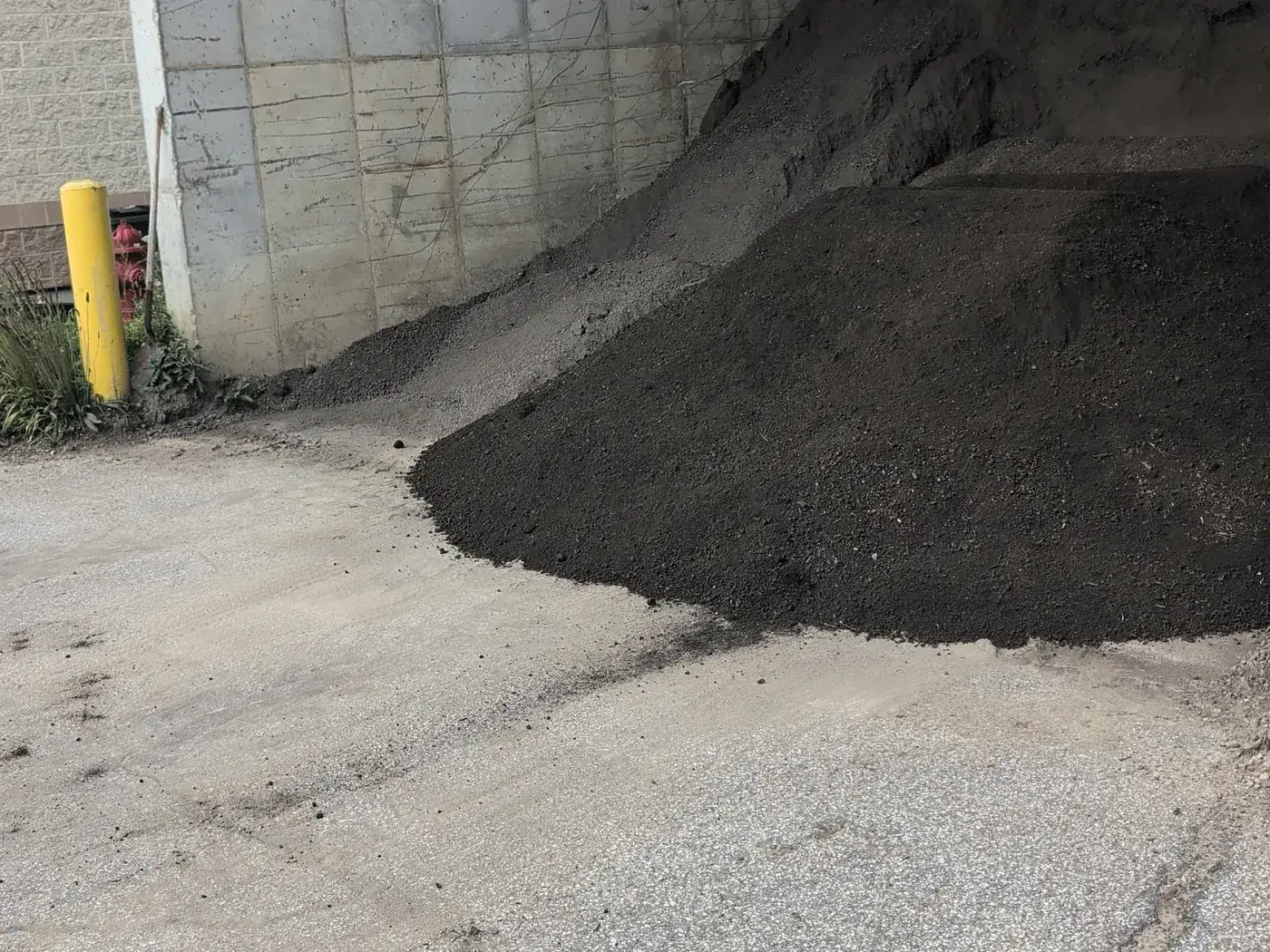
How To Blend Compost Into Topsoil For Better Garden Beds
I mix compost evenly into workable soil - not in a separate layer. For new above-ground bed fill, a starting blend is 1 part compost to 2 parts topsoil by volume: about 33% compost. Your soil condition and test results should guide the amount.
Here’s my approach:
- Check first: Test the soil, address standing water, remove weeds and debris, and wait until soil crumbles rather than smears.
- Measure before ordering: I calculate cubic yards as length × width in feet × added depth in inches ÷ 324. Added depth isn’t mixing depth.
- Blend and level: I mix through the planned soil depth, rake level, and keep feet off the bed.
- Adjust later: For established beds, I use soil needs - not the original fill ratio - to guide top-ups, usually 1/4 to 1 inch.
My rule: <u>More compost isn’t always better.</u> I record what I add and check soil needs before adding more.
Check the Bed and Gather Supplies
Check Soil Condition Before Digging
Probe several spots with a garden fork or spade, including low spots and areas of weak growth. Check the usable soil depth, buried debris, and hard layers that could block roots. Shallow soil or construction fill may need screened topsoil plus compost. If the soil is deep enough but has poor structure, compost alone may be enough. Prepare the whole bed, not just the planting holes, so roots grow in consistent soil. Use what you find to choose your materials.
Deal with persistent standing water before digging. Look for low spots, blocked outlets, or compacted subsoil. Compost can improve soil structure, but it won't solve every drainage problem. To check whether the soil is ready to work, squeeze a handful from the depth you plan to dig. A sticky, muddy mass or soil that smears is too wet. Soil that breaks into small crumbs is ready. Wait if the soil is saturated.
Before adding amendments, lime, or fertilizer, collect soil from several spots, combine the samples, and follow the lab’s instructions. Let the results guide pH and nutrient corrections instead of adding products by default. University of Minnesota Extension recommends testing every three to five years and whenever you make a major change, such as turning a lawn into a garden bed.
Gather Materials and Tools
Gather your supplies before you start. Depending on the bed’s condition, you may need screened topsoil and mature leaf compost. Have a garden fork or spade, shovel, rake, measuring tape, wheelbarrow, and sturdy gloves ready. A tarp helps keep loose material contained. Measure the full bed’s length and width, then calculate the total volume of screened topsoil and leaf compost to order.
Before mixing anything, remove weeds, weed roots, stones, and construction debris throughout the bed. Avoid chopping perennial weed roots into pieces that can regrow. When the soil is workable, break up large clods with a fork or spade, but don't grind the soil into dust. Keep feet and wheelbarrows off prepared soil so it doesn't become compacted again. Next, choose a compost ratio and calculate the material volumes.
sbb-itb-b452ec0
Choose a Compost Ratio and Calculate Volume
Match Compost Amounts to Bed Conditions
Choose a ratio that fits your bed. The amounts below are starting points. Adjust them based on soil-test results, plant needs, and compost quality. Don’t use compost as the only fill material in a new bed.
| Bed application | Approximate compost amount | Incorporation depth | Mixing method |
|---|---|---|---|
| New above-ground bed fill | 1:2 compost to topsoil by volume; use 1:1 only when soil needs and compost quality justify it. | Full planned fill depth | Blend measured volumes evenly before or during filling |
| New in-ground bed | About 3 to 4 inches of compost | Top 8 to 12 inches | Spread evenly, then mix into the soil |
| Established bed | 1/4 to 1 inch annually | Surface soil | Lightly mix around existing plants |
New-bed fill ratios are not annual amendment rates. Measure by volume, not weight, using equal buckets or wheelbarrow loads. More compost isn’t automatically better.
Measure Materials Before Ordering
With length and width measured in feet, use this formula: cubic yards = length × width × depth in inches ÷ 324. Calculate compost and topsoil separately. For a 1:2 fill blend, set aside one-third of the total volume for compost and two-thirds for topsoil.
Added-material depth is not mixing depth. Order enough material for the depth you’ll spread, not the depth you’ll mix it into. For above-ground beds, calculate the full planned fill volume first, then divide it according to your chosen ratio.
Once you’ve calculated the amounts, spread the materials evenly and begin mixing them into the bed.
Spread, Blend and Level the Soil
Spread Materials Evenly
Spread the measured materials across the whole bed. Use a shovel and rake to create an even layer before mixing. Don’t leave compost in piles or bands. For new raised beds, mix small batches in a wheelbarrow or blend the materials as you fill the bed.
Mix at the Right Depth
Work the soil only when it crumbles rather than smears. Loosen it with a garden fork or spade, then turn the compost into the top 6 to 8 inches. In deep beds without obstructions, mix to 8 to 12 inches. Keep mixing shallow around established plants to avoid disturbing their roots.
A tiller can speed up mixing in large, open beds, but use it only where there are no roots, irrigation lines, or buried obstacles. Make just enough passes to blend the materials evenly. Repeated tilling damages soil structure.
Rake Level Without Compacting
Check the corners, edges, and center down to the intended mixing depth. Spread out any visible pockets of compost, and break up remaining clods with a hoe or by hand. Remove stones, sticks, weed crowns, and other debris. Leave fine, well-decomposed organic matter in place.
Rake lightly with overlapping strokes to restore the grade and fill low spots. Work from the edges so you don’t compact the bed. Before seeding or transplanting, check for depressions where water could collect. Fill them with blended soil, not unmixed compost.
Conclusion: Adjust Compost Additions Over Time
Record the finished blend’s soil condition, compost-to-topsoil ratio by volume, mixing depth, and how evenly it was mixed. These notes help you size future top-ups.
Base the next top-up on your records and current soil needs - not the original mix ratio. Before adding compost, check soil condition and soil-test results. Use drainage, organic matter, pH, and nutrient levels to guide how much you add. Heavy, repeated applications can lead to excess phosphorus.
When established beds need more compost, spread 1/4 to 1 inch on the surface, keeping it away from stems and crowns. Lightly work it into the soil only where you won’t disturb roots.
FAQs
How can I tell if compost is ready to use?
Leaf compost is ready to use once the leaves have aged and broken down into a dark, crumbly material. O'Bryan Topsoil and Compost supplies this aged material in bulk to homeowners in Stow, Hudson, Kent, Cuyahoga Falls, Tallmadge, Akron, and nearby Summit County towns. You can use it right away to build new garden beds, feed vegetable gardens, or improve soil structure in tired lawns.
Can I plant right after mixing compost into topsoil?
Yes, you can plant right after mixing leaf compost into the top few inches of your garden soil. Leaf compost from O'Bryan Topsoil and Compost adds organic matter, helps heavy clay drain better, and helps sandy soil hold more moisture. Mix it well into your existing soil to give new plants healthier growing conditions.
Should I water the soil blend before planting?
Work with dry soil so you can rake it smooth without clumps. If you’re spreading thin layers of topsoil over existing grass, water each layer to help it settle before adding the next.
If you’re planting seed, keep the surface damp, not soaked, to help seeds germinate. Once the grass is established, water lightly and often to keep the soil surface consistently moist.
Need material delivered?
Tell us the material, the town and roughly how many yards, and we will size the load with you.