
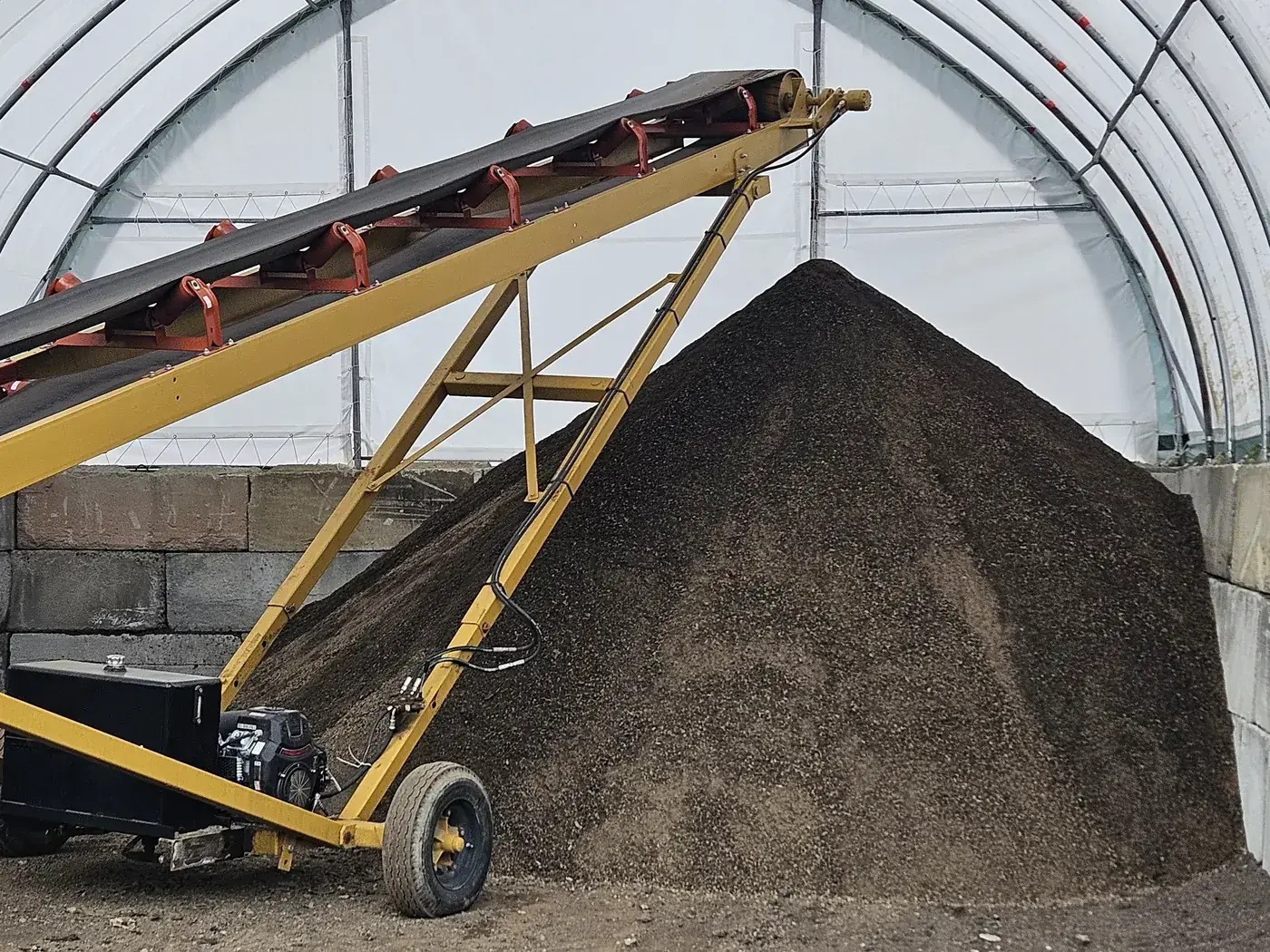
Leveling a bumpy lawn means filling the low spots with screened topsoil, raking it flat, and seeding into the fresh surface while the soil is still warm. The work is simple, but the sizing catches people out. Order too little and the job stalls halfway across the yard. Order too much and a pile sits on the driveway for weeks.
This guide walks through the timing, the math in cubic yards, and the order of operations for a late summer leveling job in Summit County.
Here's the short version:
- Fill low spots and dips with screened topsoil, not with whatever is scraped from the garden bed.
- One cubic yard covers about 100 square feet at three inches deep, so measure the low areas before ordering.
- Spread thin, rake level, seed, and keep the surface damp while the new grass fills in.
Why Lawns Get Bumpy in the First Place
A lawn that was flat when the house was built rarely stays that way. Heavy clay settles unevenly after wet seasons. Old stump holes and utility trenches sink as the backfill compacts. Foot traffic, mower wheels, and winter equipment carve shallow ruts that get deeper each year.
The result is a surface that scalps on the high spots when you mow and holds water in the low ones. Thin, bare patches usually follow, and those patches are exactly where weeds move in first.
Filling the dips is the fix, but the material matters. Garden soil pulled from a bed is full of roots, stones, and old mulch, and it will not rake out to a smooth, seed ready surface. Screened topsoil has the rocks, roots, and debris pulled out of it, which is why it spreads evenly and gives seed consistent contact with the ground underneath.
Timing the Job for Fall Seeding
Late summer into early fall is the window most Ohio homeowners want. Soil is still warm, nights are cooling, and there is enough season left for new grass to root before the ground turns cold.
Work backward from your seeding date. Order the topsoil first so it arrives with a few dry days on either side. Wet topsoil clumps and will not rake smooth. If the forecast is soaking, wait. A delayed delivery is easier to manage than a pile of mud spread across a lawn.
Keep in mind that bulk material season is a warm weather business. Screened topsoil, leaf compost, and asphalt millings move roughly April through October, so a leveling project planned for late fall or winter is a project that waits until spring.
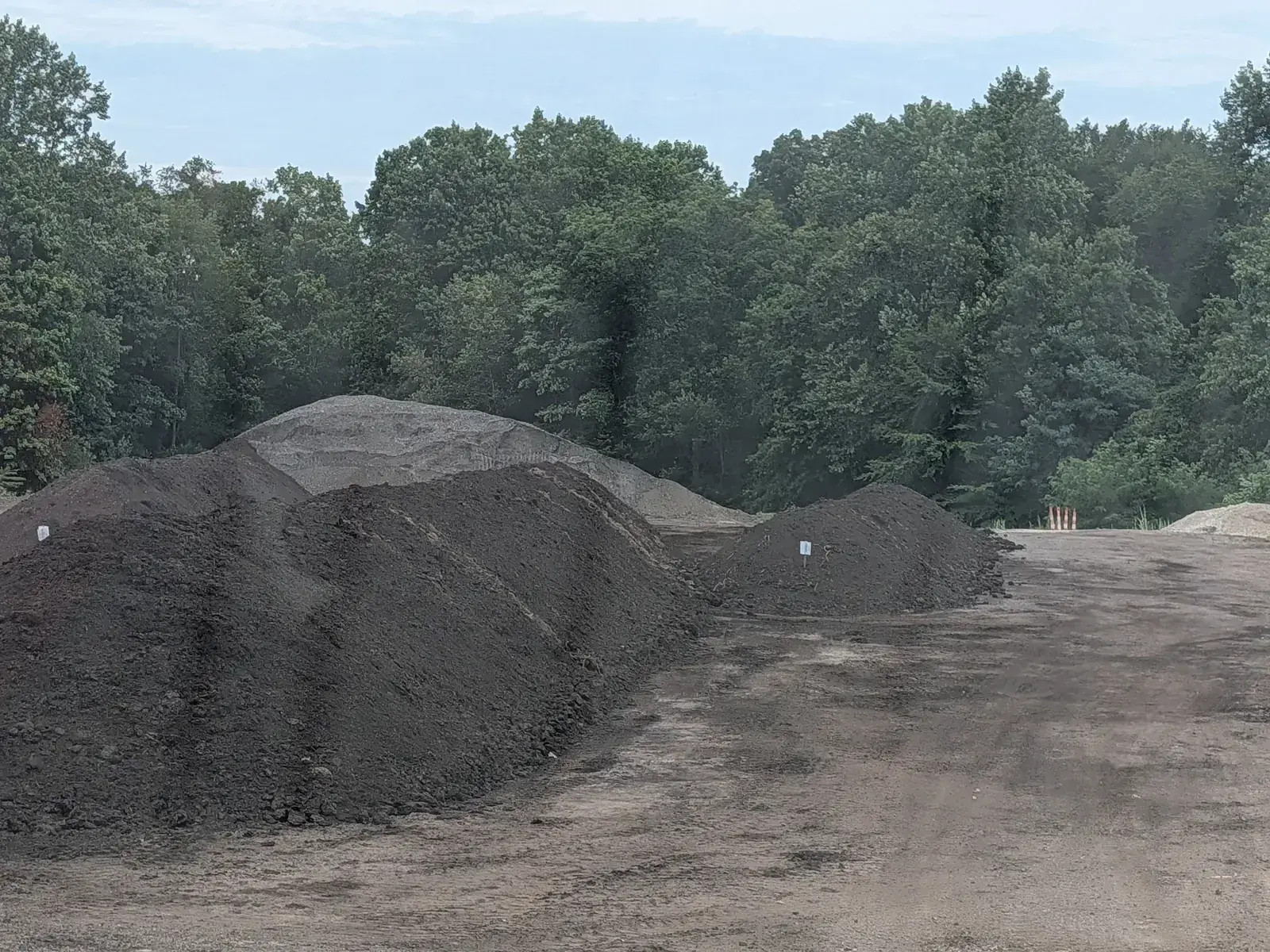
A dump truck load of screened topsoil placed at the edge of a driveway, ready to be moved by wheelbarrow.
Sizing the Load in Cubic Yards
Bulk topsoil is sold by the cubic yard, not by the bag, so the first step is measuring. Pace out the length and width of the area you plan to topdress and multiply for square footage. If you are filling scattered dips rather than the whole lawn, add up the individual patches instead of the entire yard.
The reference point to work from: one cubic yard covers about 100 square feet at three inches deep. Everything else is arithmetic from there.
| Spread depth | Approximate coverage per cubic yard | Typical use |
|---|---|---|
| Half inch | About 600 square feet | Light topdressing over an established lawn |
| One inch | About 300 square feet | General leveling of shallow dips |
| Two inches | About 150 square feet | Filling noticeable low areas |
| Three inches | About 100 square feet | Deep fill, stump holes, settled trenches |
A note on depth. Spreading more than an inch at a time over living grass can smother it. If a dip needs three inches of fill, it is better to add an inch, let the grass grow through, and repeat. Areas being fully reseeded can take a deeper fill in one pass because the turf is starting over anyway.
Load limits are worth knowing before you plan the day. Screened topsoil comes up to five cubic yards per load, and leaf compost up to eight. A job that needs more than that is simply more than one load.
Step by Step Leveling and Seeding
1. Mow short and clear the surface
Cut the lawn lower than usual and bag the clippings. Rake off leaves and thatch. Seed needs to reach soil, and a short surface makes it far easier to see where the low spots actually are.
2. Pick the drop location
Bulk topsoil arrives by dump truck and is placed where the truck can safely reach, usually at the curb or the end of a driveway. Trucks do not typically drive across lawns to deliver. Pick a spot that is close to the work, out of the way of cars, and on a hard surface if possible. A tarp underneath makes cleanup much easier.
3. Fill the low spots first
Wheelbarrow topsoil to the worst dips and dump small piles rather than one large one. Small piles are easier to spread and less likely to bury grass.
4. Rake it level
Use the back of a landscape rake or a leveling tool to push soil into the hollows and pull it off the high points. Work in one direction, then across, and keep checking the surface from a low angle where dips show up best.
5. Seed and firm the surface
Spread seed over the fresh topsoil and rake lightly so it settles into the soil rather than sitting on top. Firming the surface improves contact and keeps seed from washing into the next low spot during the first rain.
6. Water lightly and often
New seed needs a surface that stays damp, not soaked. Short, frequent watering beats one long soak until the grass is up and established.
Topsoil or Compost for This Job
Homeowners often ask whether leaf compost can replace topsoil here. The two do different work. Topsoil is what you build with. Compost is an amendment you mix in to add organic matter.
For leveling and filling, screened topsoil is the material. For a lawn that grows poorly because the soil is tired, heavy clay, or too sandy, leaf compost is the useful addition. It improves drainage in heavy clay and holds moisture in sandy soil. Many yards benefit from both, with topsoil doing the filling and compost worked in where the soil needs help.
If a new bed or garden is also on the list this fall, that is where Leaf Compost Delivery fits, and it comes in larger loads than topsoil does.
Getting Material to a Stow Area Lawn
O'Bryan Grounds Maintenance has been independently owned and operated in Stow since 1993. Material is screened, stacked, and loaded at the company's own yard on Seasons Road in Stow, which runs weekdays 9 to 5 during the warm months, roughly April through October.
Bulk Screened Topsoil Delivery goes out by the cubic yard across Stow, Cuyahoga Falls, Munroe Falls, Silver Lake, Tallmadge, Hudson, Kent, Akron, Twinsburg, Macedonia, Aurora, and Streetsboro. Homeowners who share the square footage and the depth they are after can have the load sized with them before it is scheduled.
To get a load scheduled before seeding season closes, see the bulk material delivery details and coverage area or call us at (330) 805-7556. Tell us about your property or project and we will get right back to you.
FAQs
How much topsoil is needed to level a lawn?
One cubic yard covers about 100 square feet at three inches deep, so a light topdressing spreads much further than a deep fill. Measure the low areas rather than the whole lawn if only the dips are being filled. O'Bryan Topsoil and Compost will size the load once it knows the project.
Can topsoil be spread over existing grass?
Yes, in thin layers. Anything much over an inch at a time risks smothering the turf that is already there. For deeper dips, build the level up across two or three passes, or reseed the area outright.
Where does the truck put the topsoil?
Material is delivered by dump truck and placed where the truck can safely reach, typically at the curb or the end of a driveway. O'Bryan Topsoil and Compost does not typically drive across lawns to deliver. Past the curb, the company is not responsible for damage to driveways, sidewalks, homes, garages, fences, plants, vehicles, or utility wires.
Is it too late in the year to order topsoil?
The material yard runs warm months only, roughly April through October, weekdays 9 to 5. A fall leveling and seeding project fits comfortably inside that window. Winter work waits for spring.
What is the difference between topsoil and leaf compost?
Topsoil is what you build with, and it is the right material for filling low spots and creating a seed bed. Leaf compost is worked into existing soil instead, adding organic matter rather than volume. It improves drainage in heavy clay and moisture retention in sandy soil.
Need material delivered?
Tell us the material, the town and roughly how many yards, and we will size the load with you.