
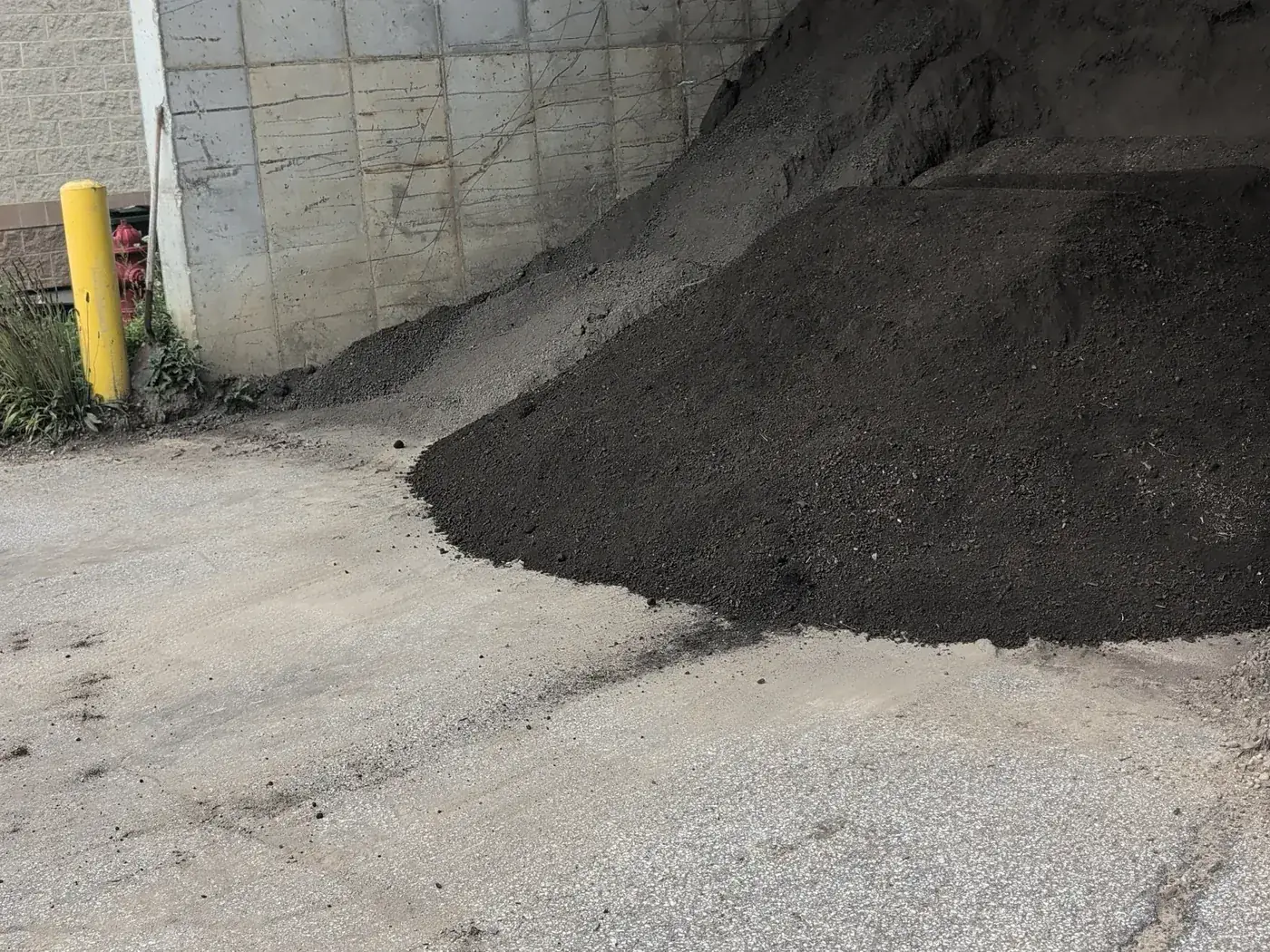
For a long residential or rural drive, asphalt millings usually hold a firmer, tighter surface than loose gravel because they bind together in warm weather instead of staying loose. Gravel is still a reasonable material, and it has its place. The difference shows up over a long run, where water has time to pick up speed and carry stone with it. It also shows up in how often you are out there raking the edges back into the middle.
Here's the short version:
- Millings compact and knit together in the heat, so they shed water better than loose gravel.
- Loose gravel tends to migrate and wash out, which is worse on long drives and on slopes.
- Millings are recycled road surface, so the material stays out of the landfill.
- Both are sold and delivered by the cubic yard, and one cubic yard covers about 100 square feet at three inches deep.
- Timing matters. Millings are best installed in the heat of the summer.
Why long driveways behave differently
A short suburban drive is a simple surface. Twenty or thirty feet of anything holds together reasonably well because there is not much distance for water to work with. A long drive is a different problem. It is often part drainage channel, whether you intended that or not. Rain that lands anywhere along the run wants to travel down the length of it, and every foot of travel adds energy.
That is where loose material starts to lose the argument. Individual stones have nothing holding them to the stones next to them. Water moves the small material first, then the larger pieces follow, and you end up with bare ruts down the middle and berms along the edges. Tires make it worse by throwing stone sideways every time someone accelerates or turns in.
Millings work differently. They are recycled asphalt road surface, so each piece still carries a small amount of the binder that held the original road together. In warm weather that binder softens slightly. Compacted and driven on, the material knits into something closer to a single surface than a pile of separate stones. It sheds water instead of letting water run through and under it.
Slope and shade on rural lots
Plenty of Summit County properties have drives that run down a grade, pass under mature trees, or both. Slope speeds water up. Shade keeps a surface damp longer after rain and slows the warming that helps millings set. Neither rules millings out, but a shaded drive is a good reason to be strict about installing in the hottest part of the season rather than squeezing the job in late in the fall.
What compaction actually does for you
Compaction is the step people skip, and it is the step that decides how the drive performs. Millings placed and left alone behave a lot like gravel. Millings spread in layers, compacted, and then driven on through hot weather behave like a paved surface with a rougher texture.
A firmer surface changes daily life on a long drive. Plow blades ride over a bound surface instead of digging into loose stone and scattering it into the lawn. Delivery trucks and heavier vehicles do not sink in. Weeds have a harder time pushing through. Mud season is shorter, which matters if your drive is the only way in.
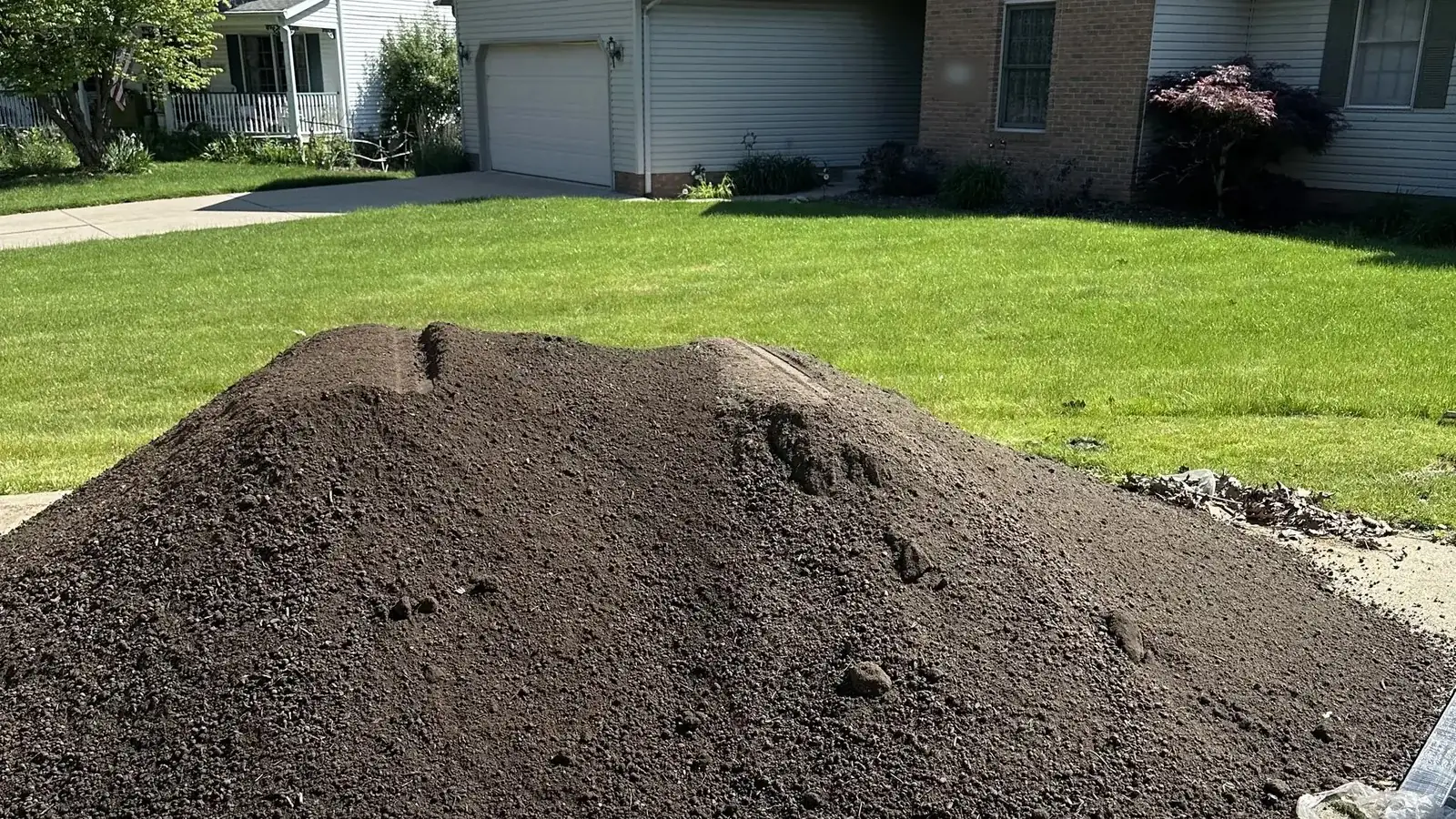
A compacted asphalt millings driveway surface, with the darker recycled road material knitted together rather than sitting loose.
Millings, gravel and new asphalt side by side
| Consideration | Asphalt millings | Loose gravel | New asphalt |
|---|---|---|---|
| How it holds together | Binds and knits in warm weather | Stays loose, stones move independently | Fully bound paved surface |
| Water shedding | Sheds water better than loose gravel | Water runs through and along it | Sheds water |
| Washout on a long run | Far less than loose gravel | The main weak point | Not an issue when intact |
| Upkeep | Occasional regrading of the surface | Regular raking and topping up | Patching and resurfacing over time |
| Surface finish | Firm with a rougher texture | Loose stone underfoot and under tires | Smooth and sealed |
| Material source | Recycled road surface kept out of the landfill | Quarried stone | New material |
| Best install window | The heat of summer | Any time | Warm season |
Millings sit between the other two. They do not give you the smooth, sealed look of fresh asphalt, and they do not leave you managing loose stone the way gravel does.
Sizing the load and getting it placed
Millings are sold and delivered by the cubic yard, the same as Bulk Screened Topsoil Delivery and compost. One cubic yard covers about 100 square feet at three inches deep, so a drive that is ten feet wide and a hundred feet long is roughly a thousand square feet, or about ten yards at that depth. Measure the width and the length, decide on your depth, and the math follows from there.
For a long drive that means multiple loads. Millings come up to five yards per load, so plan on a few trips rather than one drop. It is also worth knowing up front that asphalt millings never qualify for waived delivery the way screened topsoil and leaf compost can in Stow and Hudson, so a delivery charge applies to every millings load.
Placement is the other planning item. Material is dropped where a dump truck can safely reach, and trucks do not typically drive across lawns to deliver. On a long drive that usually means staging piles near the top or at the curb and moving material down the run with a tractor, skid steer or wheelbarrow. Think that through before the truck arrives.
The soft edges
Millings hold a firm center, but the shoulders of a long drive are still soil. If those edges are rutted, scalped or low, screened topsoil is what you use to rebuild and reseed them once the surface work is done. The same approach covered in How to Level a Bumpy Lawn With Screened Topsoil Before Fall Seeding applies to driveway shoulders, just in a narrower strip.
Getting millings delivered in Summit County
O'Bryan Grounds Maintenance has been independently owned in Stow since 1993. The material side trades as O'Bryan Topsoil and Compost out of the yard at 859 Seasons Rd Suite 1 in Stow, open weekdays 9 to 5 in the warm months, roughly April through October. We run Asphalt Millings Delivery across Stow, Cuyahoga Falls, Munroe Falls, Silver Lake, Tallmadge, Hudson, Kent, Akron, Twinsburg, Macedonia, Aurora and Streetsboro.
Give us the dimensions of your drive and we will work out the cubic yards. Call (330) 805-7556, or start with bulk material delivery across Summit County.
FAQs
How do asphalt millings compare to gravel?
Millings bind together in warm weather, so they hold a firmer surface and wash out far less than loose gravel. Gravel stays loose, which means stone migrates toward the edges and washes down slopes. On a long drive, that difference compounds over the length of the run.
How much do I need for a driveway?
One cubic yard covers about 100 square feet at three inches deep. Multiply your drive's width by its length to get square feet, then divide by 100 for a three inch layer. Give us the dimensions and we will work out the cubic yards.
Why do millings need to go down in hot weather?
Millings are best installed in the heat, because that is when the recycled road surface compacts and knits together. Installed outside that window, the material behaves more like loose stone. That is why summer is the window for this job.
How is the material delivered?
By dump truck, up to five yards per load for asphalt millings. Material is placed where the truck can safely reach, and we do not typically drive across lawns. Delivery is made to the curb, and past the curb we are not responsible for damage to driveways, sidewalks, homes, garages, fences, plants, vehicles or utility wires.
Which towns can get millings delivered?
Delivery covers Stow, Cuyahoga Falls, Munroe Falls, Silver Lake, Tallmadge, Hudson, Kent, Akron, Twinsburg, Macedonia, Aurora and Streetsboro. Loads are made up at the yard on Seasons Road in Stow. The material yard runs weekdays 9 to 5 in the warm months, roughly April through October.
Need material delivered?
Tell us the material, the town and roughly how many yards, and we will size the load with you.