
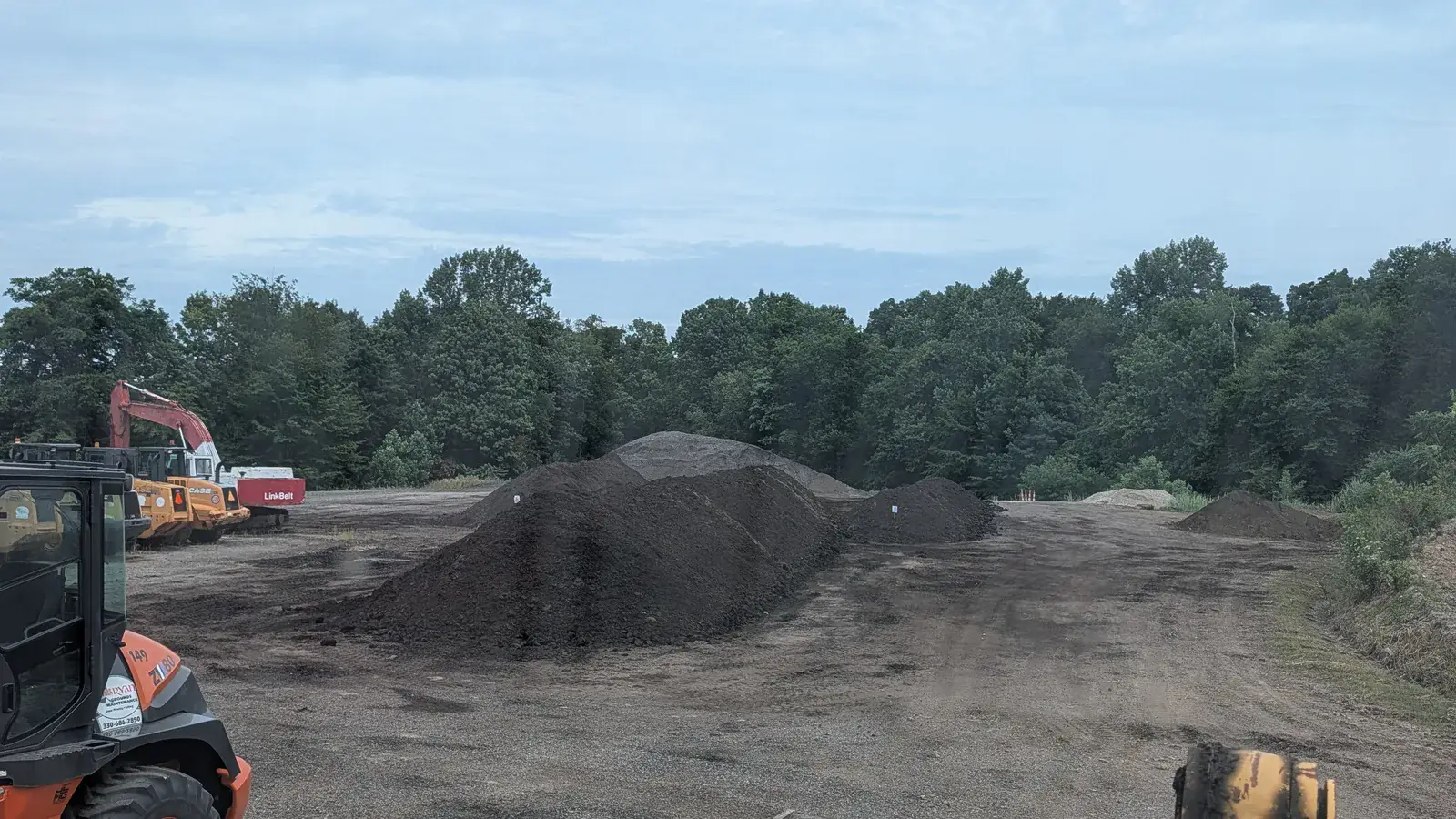
Most soggy yards in Summit County are not a plumbing problem, they are a shape problem, and late summer is the easiest time of year to correct the shape. The ground is dry, the grass is still growing, and a load of screened topsoil can be spread and settled before the heavy autumn rain arrives. Walk the property now and you can usually see where water wants to go. Wait until November and you will be guessing under an inch of standing water.
Here's the short version:
- Water problems show up as low spots, soft ground, moss, and grass that dies back in patches after every storm.
- Fill and regrade with screened topsoil while the soil is dry, then seed so roots hold the new grade.
- Some problems are grading problems and some are downspout, compaction or runoff problems, and topsoil does not fix the second group.
Read Where the Water Actually Goes
The single most useful thing a homeowner can do is watch the yard during a hard rain. Not after. During. Stand at a window or under the porch roof and follow the sheets of water. You will see where they leave the roof, where they cross the lawn, and where they stop.
Signs you can read on a dry day
If you missed the rain, the lawn keeps a record of it:
- Silt or fine soil fanned out across a walk or driveway, which shows the direction water traveled.
- Moss and thin turf in a patch that gets normal sun, which usually means the ground stays wet.
- Ground that feels spongy underfoot days after everyone else's yard has dried.
- Mulch washed out of a bed and piled against the low edge.
The straight edge test
Low spots in a lawn are sneakier than people expect. A shallow dip reads as flat to the eye but holds water for days. Lay a long straight board across the suspect area, set a level on top of it, and measure the gap underneath at the deepest point with a tape. That gap is the depth of fill you need in the middle of the dip, and depth times area is what determines how much material you order.
Then trace uphill from the wet area, not just around it. Often the culprit is a downspout dumping at the foundation, a driveway edge steering runoff into the lawn, or a neighboring property that sheds toward you. A dip in the turf can be the symptom while the real cause sits well away from it.
A Late Summer Drainage Checklist
Work through the property in this order before the weather turns.
- Check every downspout. Follow where it discharges and whether that water then runs across lawn, into a bed, or back toward the house.
- Walk the perimeter of the foundation. The ground should fall away from the house, not toward it.
- Mark low spots with a flag or a stake while you can see them, because they disappear once the grass is tall.
- Probe compacted areas. Paths where people cut the corner, dog runs and parking strips shed water instead of absorbing it.
- Look at the driveway and any gravel lane. Ruts and washouts move water where you do not want it.
- Measure the depth of each low spot with the straight edge, and step off the length and width.
- Decide what is a fill job, what is a downspout job, and what needs a real drainage contractor.
A shallow low spot in a lawn holding water after a storm, with the surrounding turf still firm underfoot.
When Topsoil Solves It and When It Does Not
Regrading with soil is the right answer more often than people think, but it is not the answer to everything. The honest split looks like this.
| What you are seeing | Does added topsoil fix it |
|---|---|
| Shallow dish in the lawn that holds water after rain | Yes, fill and reslope so water keeps moving |
| Settled trench over an old utility line or a pulled stump | Yes, fill in layers and reseed |
| Ground sloping back toward the foundation | Yes, rebuild the grade so it falls away from the house |
| Downspout discharging straight onto the lawn | No, the outlet has to be moved or extended first |
| Heavy clay that stays wet even on flat, high ground | Partly, compost worked in helps the soil take water |
| Rutted gravel lane washing out every storm | No, that is a surfacing problem |
| A true spring, a high water table or a neighbor's whole roof draining onto you | No, that needs a drainage design |
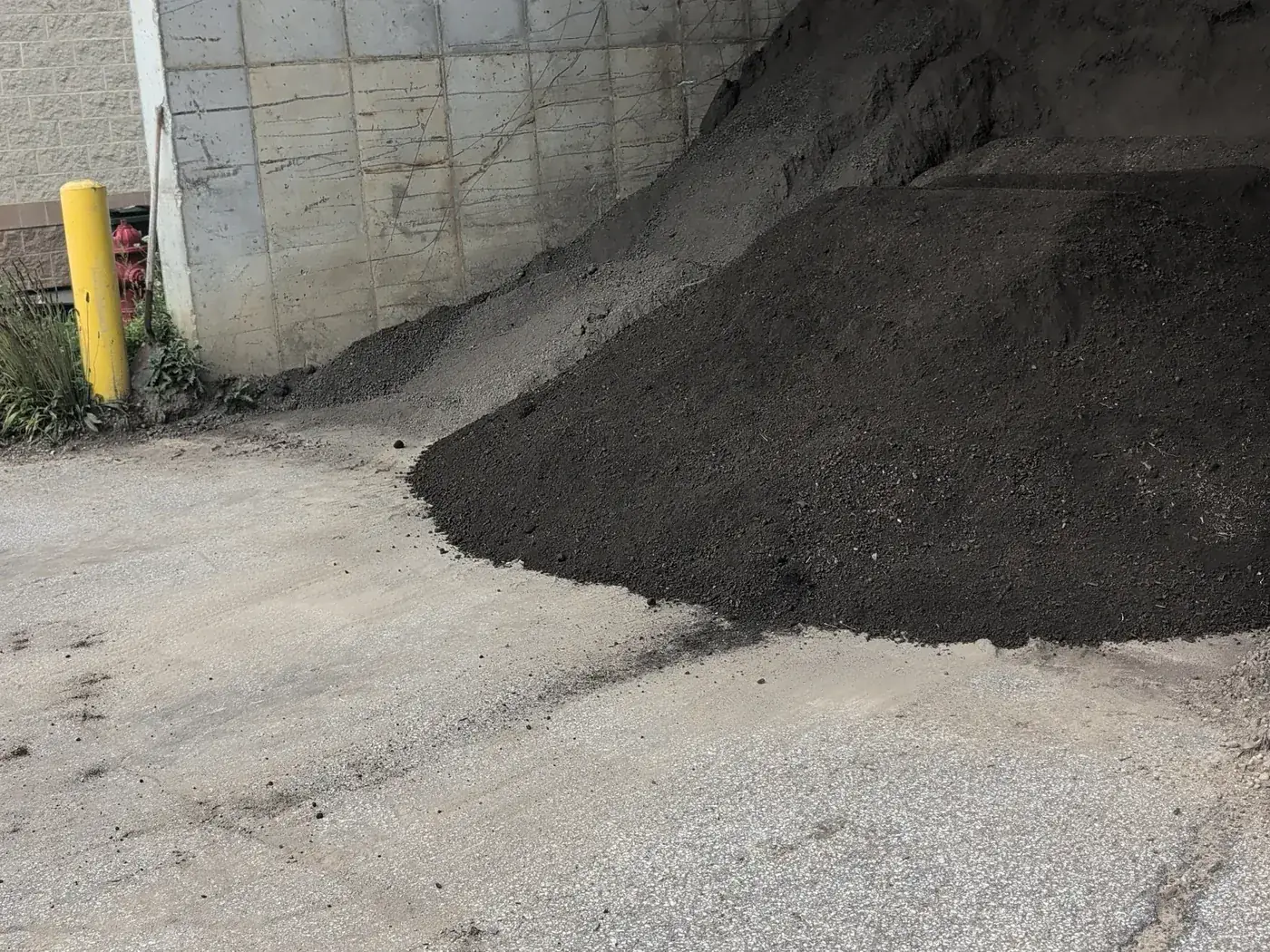
For the shallow fill work, use screened topsoil rather than whatever is stacked behind the garage. Screened material has had the rocks, roots and debris pulled out, which is what lets you feather a thin layer over living grass without leaving lumps and voids. The same approach used to level a bumpy lawn with screened topsoil before fall seeding applies to low spots, just with more depth in the middle of the dip and a long taper out to the existing grade.
For heavy clay that holds water on flat ground, the fix is organic matter rather than more dirt. Leaf compost worked into the top few inches opens the soil so it can take water in instead of shedding it. That is a soil structure job, and it works alongside grading rather than instead of it.
For a lane or a parking area that keeps rutting, the surface itself is the issue. Recycled asphalt millings compact and knit together in warm weather, so they shed water better than loose gravel, which is why they are best installed while it is still hot out.
Sizing the Job and Getting Material On Site
Ordering soil is simple arithmetic once you have measured. One cubic yard covers about 100 square feet at three inches deep. So a low spot ten feet by twelve feet that needs an average of three inches of fill is about one and a fifth yards. Round up, because soil settles and the taper always eats more than you expect. If the math is not obvious, give the dimensions and the depth and we will work out how many yards the job takes.
Work in layers rather than dumping the whole depth at once. A thin pass over existing grass, watered in and allowed to settle before the next pass, lets the turf grow up through it. For a deep dish or a settled trench, cut the sod, build the grade in lifts, tamp each one, and seed the finished surface.
Also plan where the truck drops the pile. Material is placed where a dump truck can safely reach, and the crew does not typically drive across lawns to deliver. Pick a spot on the driveway or near the curb that is close to the work but out of the way of daily parking, and have tarps and a wheelbarrow ready.
O'Bryan Topsoil and Compost in Stow
O'Bryan Grounds Maintenance has been independently owned and operating in Stow since 1993, and the material side runs out of its own yard on Seasons Road. Bulk Screened Topsoil Delivery is sold by the cubic yard and screened to pull the rocks and roots out, which is what you want for filling low spots, regrading and new sod. Leaf Compost Delivery covers the clay soil side of the problem, and Asphalt Millings Delivery handles driveways and lanes that keep washing out.
Loads run up to five yards for screened topsoil and up to eight yards for leaf compost. Delivery is $50 per load, and it is included on screened topsoil and leaf compost in Stow and Hudson on loads of four yards or more. The material yard is open weekdays 9 to 5 in the warm months, roughly April through October, which is one more reason to get drainage work done before the season closes.
Tell us the size of the area and how deep the dip is and we will size the load. Details on the delivery area and how loads are dropped are on the bulk material delivery page, or call (330) 805-7556.
FAQs
How much topsoil do I need for a low spot in the lawn?
Measure the length and width of the dip, then estimate the average depth with a straight edge and a tape. Those three numbers are all that is needed to convert the job into cubic yards. Tell us the project and we will size the load.
Can I just dump soil on top of the grass?
For a shallow correction, yes, as long as you go in thin passes and let the grass grow through before adding more. For anything deeper, cut the sod out, build the grade in lifts, and seed the finished surface.
Is topsoil or leaf compost the right material for a wet yard?
Topsoil is what you build with, so it is the material for filling and reshaping. Compost is an amendment you mix in to add organic matter, and it improves drainage in heavy clay. Many yards in this area need some of both.
Where will the truck put the load?
Material is delivered by dump truck and placed where the truck can safely reach, typically at the curb or on a driveway. We do not usually drive across lawns. Past the curb, we are not responsible for damage to driveways, sidewalks, homes, garages, fences, plants, vehicles or utility wires.
How late in the year can I get topsoil delivered?
The material yard runs weekdays 9 to 5 during the warm months, roughly April through October. Drainage and grading work goes best while the soil is dry, so late summer into early fall is the practical window in Summit County.
Need material delivered?
Tell us the material, the town and roughly how many yards, and we will size the load with you.