
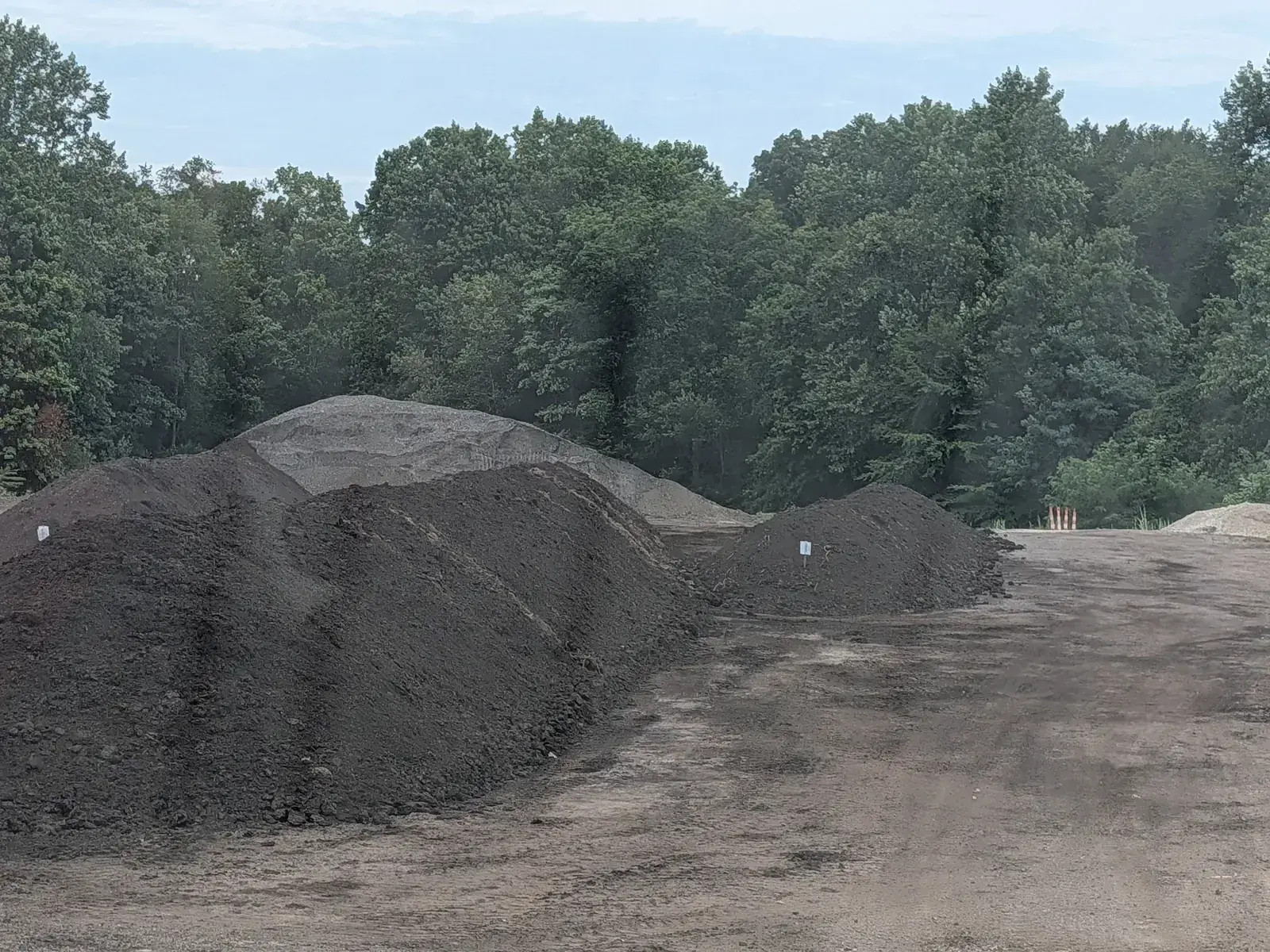
Seed that lands on thatch, hard clay or old turf mostly does nothing, and a thin layer of screened topsoil spread over fresh seed is what turns a bag of grass seed into an actual lawn. Fall is the easiest season in Northeast Ohio to thicken a thin yard, because the soil is still warm from summer while the air has cooled off. The part most homeowners skip is the topdressing. That one step is the difference between a patchy result and even germination across the whole area.
Here's the short version:
- Seed needs direct contact with soil to hold moisture and germinate, and a light topdress of screened topsoil gives it that contact.
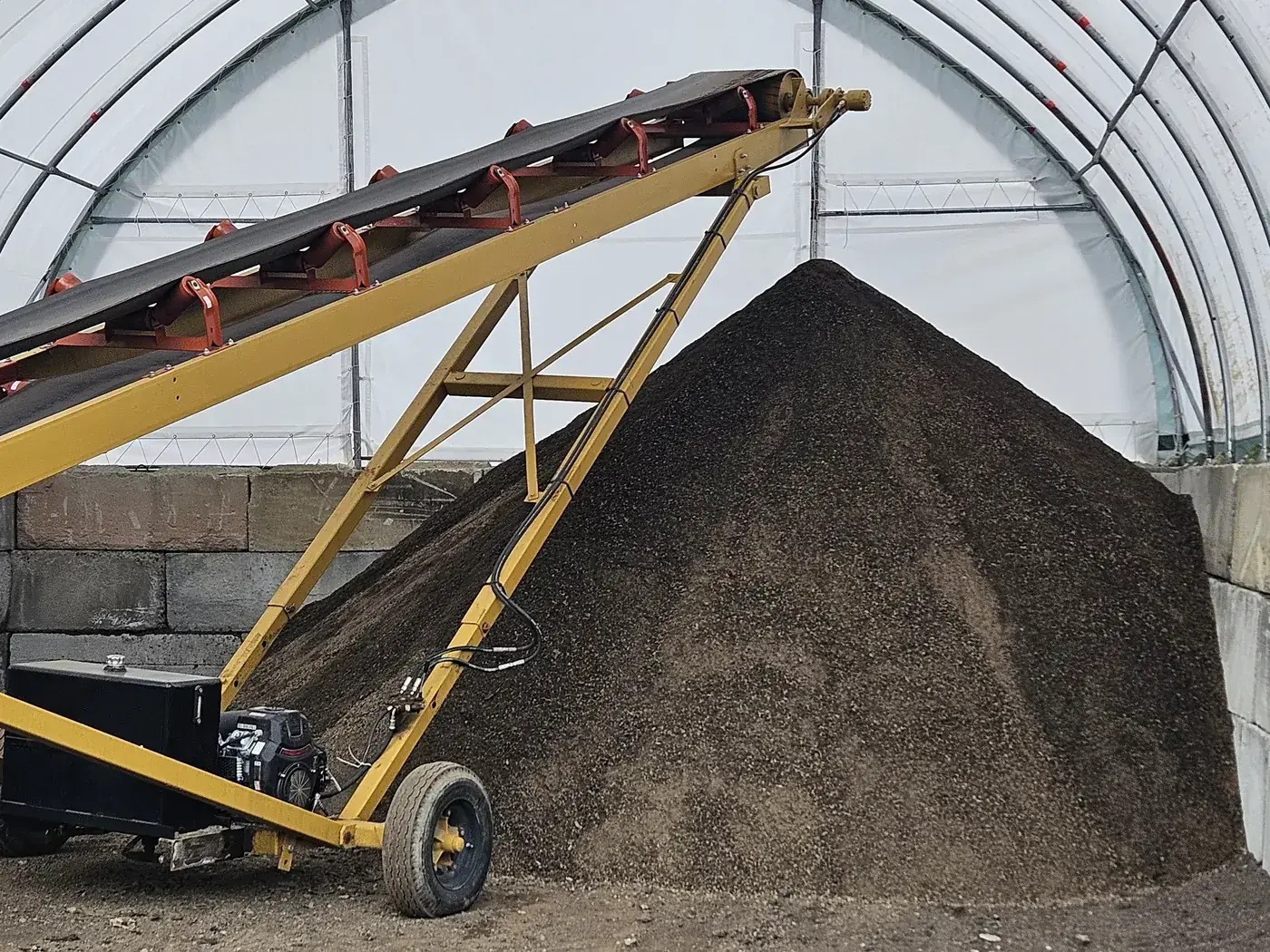
- Screened topsoil is screened to pull out rocks, roots and debris, so it spreads thin and clean instead of leaving lumps across the lawn.
- Sizing a load starts with square footage, and because a topdress is far thinner than a fill, a single yard of material covers a lot of lawn.
Why Fall Is the Window in Summit County
Grass seed in this part of Ohio has two honest chances a year, and fall is the better one. The ground holds summer heat well after the air cools, so seed germinates fast while weed pressure drops off. Autumn rain does a lot of the watering for you. The new seedlings then get a stretch of cool, damp growing weather to put down roots before the ground freezes.
Spring seeding fights the opposite conditions. Cold wet soil slows germination, then summer heat arrives before the young grass has any root depth. That is why a yard seeded in September usually holds up better the following summer than the same yard seeded in April.
The practical deadline is simply frost. Seed needs enough warm days after it sprouts to establish itself, so the later in fall you go, the more you are gambling. Anything you can do to get the seed down while the soil is still warm works in your favor.
Seed to Soil Contact Is the Whole Game
Grass seed is not a fertilizer. It is a live thing that has to stay damp long enough to swell, split and push a root down. On bare packed clay, seed sits on the surface, dries out between rains and gets eaten or blown off. On top of thatch, it never reaches soil at all and dies once the first root tries to find moisture.
Topdressing solves both problems at once. A thin skin of screened topsoil pressed over fresh seed holds moisture against the seed, shades it from sun and wind, and keeps it in place when the rain comes hard. It also gives the new roots something loose to grow into instead of a compacted surface.
This is where quality of material matters. Unscreened dirt carries rocks, roots and clumps that make a thin, even spread impossible. Screened topsoil rakes out smooth and thin, which is exactly what overseeding needs.
A thin layer of screened topsoil raked over freshly seeded turf, with existing grass blades still showing through.
How Thick to Spread, and Where to Go Deeper
The rule for topdressing is restraint. You want a layer thin enough that the existing grass blades still poke through when you are done. If the old turf disappears under the soil, you have gone too heavy and you will smother what you already have. Drag it with the back of a rake so the material settles into the canopy rather than sitting on top of it.
Low spots are a separate job and get treated differently. Anywhere water stands, fill in layers and let each pass settle rather than dumping three or four inches at once. If your yard is uneven enough that the mower scalps the high points, handle the leveling first and seed second. The walkthrough in How to Level a Bumpy Lawn With Screened Topsoil Before Fall Seeding covers that sequence, and it is worth doing before you spend money on seed.
Heavy clay is the other common situation around Summit County. If the ground is dense and drains slowly, compost is the amendment that changes soil structure over time, while topsoil is the material you build and level with. A lot of fall renovations use both. There is more on how organic matter behaves in local clay in What Leaf Compost Actually Does to Heavy Clay Soil in Northeast Ohio.
Choosing Your Material and Sizing the Load
| Approach | What it does | Best for |
|---|---|---|
| Seed broadcast with no topdressing | Seed dries out or washes off, germination is patchy | Nothing, really |
| Thin screened topsoil topdress | Holds moisture on the seed, gives roots loose soil | Overseeding an existing lawn |
| Screened topsoil in layers | Fills low spots and evens grade before seeding | Bumpy or dished yards |
| Leaf compost mixed in | Adds organic matter, improves drainage in clay and moisture retention in sandy soil | Tired soil and new beds |
Sizing a load starts with square footage, not guesswork. Measure the area you plan to seed, length times width, and note the number. One cubic yard covers about 100 square feet at three inches deep, and a topdress is a fraction of that depth, so the same yard stretches across a much larger area. The math scales directly with how thin you go.
If you are also filling low spots, measure those areas separately and estimate depth, because that is where most of the material actually goes. Screened topsoil and leaf compost are both sold and delivered by the cubic yard, with loads of screened topsoil going up to five yards per load and leaf compost up to eight. When in doubt, describe the project and let someone who loads this material size it for you. Details on the material itself are on the Bulk Screened Topsoil Delivery page, and the amendment side is covered under Leaf Compost Delivery.
Getting Material to Your Yard Before the Window Closes
O'Bryan Grounds Maintenance has been independently owned and operated in Stow since 1993. Our screened topsoil, leaf compost and asphalt millings are screened, stacked and loaded at our own yard on Seasons Road in Stow, and the material yard runs weekdays during the warm months, roughly April through October. We deliver by the cubic yard across Stow, Cuyahoga Falls, Munroe Falls, Silver Lake, Tallmadge, Hudson, Kent, Macedonia, Norton and Akron.
Material comes by dump truck and gets placed where the truck can safely reach, and we do not typically drive across lawns to deliver, so it helps to have a spot in mind near the driveway or curb. Tell us the square footage and what you are trying to fix, and we will work out how many yards the job takes. You can see how bulk material delivery works across Summit County or call us at (330) 805-7556.
FAQs
How much topsoil do I need for overseeding?
Start with the square footage of the area. One cubic yard covers about 100 square feet at three inches deep, and a topdress for seeding is far thinner than that, so a yard goes a long way. Tell us the project and we will size the load.
Should I use topsoil or leaf compost over new seed?
Topsoil is what you build with, and compost is an amendment you mix in to add organic matter. For a straight overseeding topdress, screened topsoil is the simpler choice. If the soil underneath is heavy clay, compost worked in beforehand helps the drainage problem that caused the thin lawn in the first place.
Can the truck put the topsoil close to where I am working?
Material is placed where the dump truck can safely reach, which usually means the driveway or the curb. We do not typically drive across lawns to deliver. Past the curb, we are not responsible for damage to driveways, sidewalks, homes, garages, fences, plants, vehicles or utility wires.
Is it too late in the season to order topsoil?
The material yard runs warm months only, roughly April through October, so fall orders are best placed while the weather still allows seeding. Call us to check availability for your dates.
Need material delivered?
Tell us the material, the town and roughly how many yards, and we will size the load with you.