
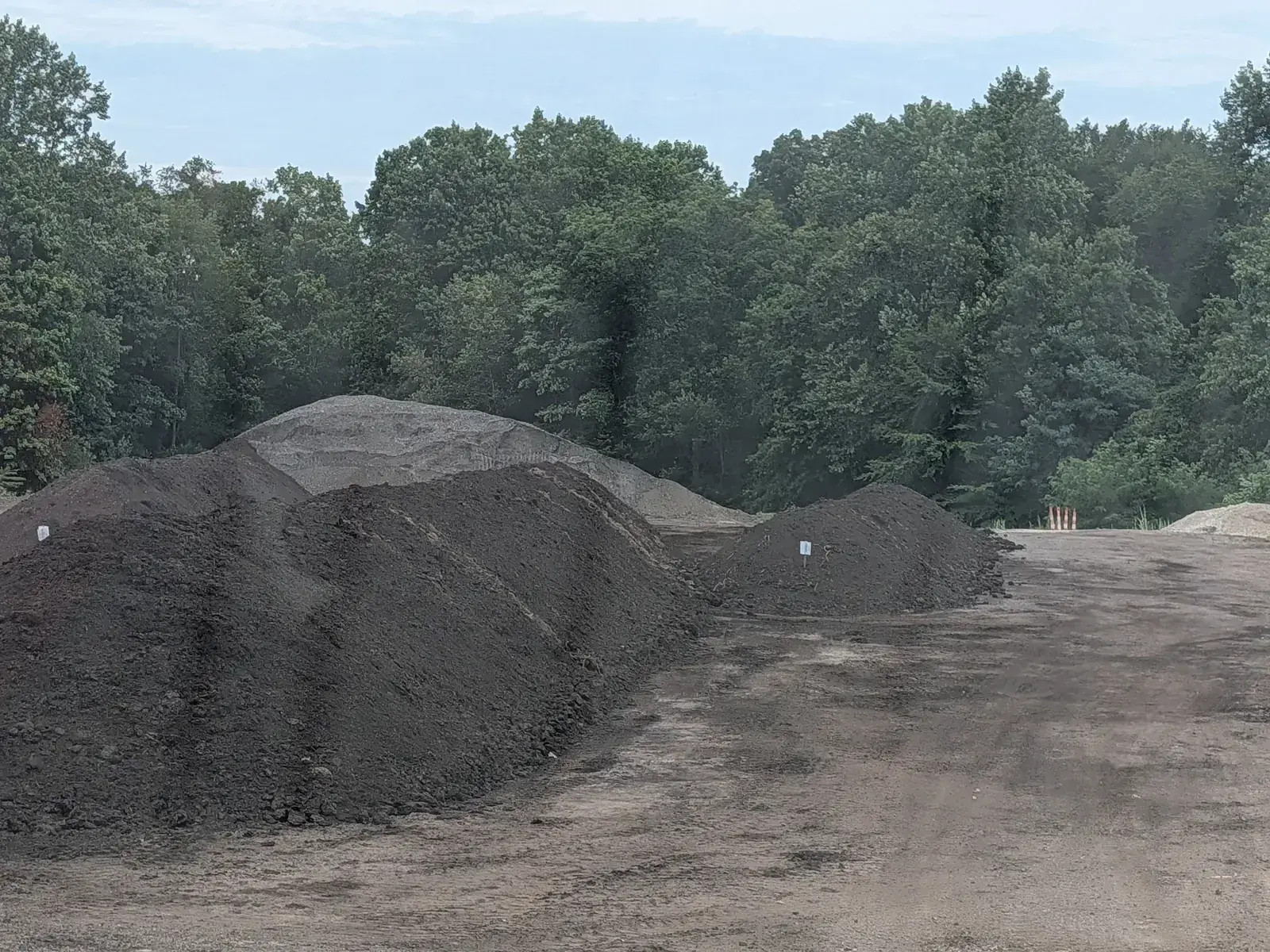
Bulk delivery is simpler than most first time buyers expect: you work out how many cubic yards the job needs, you call the yard with the project and the address, and a dump truck brings the material and places it where it can safely reach. The part that trips people up is not the ordering. It is the access, the clearance and deciding ahead of time exactly where the pile should land. Sort those three out and the drop takes minutes.
Here's the short version:
- Material is sold by the cubic yard, and one cubic yard covers about 100 square feet at three inches deep.
- Load sizes have limits, so a big job may mean more than one trip.
- The truck places material where it can safely reach, and that spot should be cleared and chosen before delivery day.
Step One, Work Out How Many Yards
Bulk material is not sold by the bag or the scoop. It is sold by volume, in cubic yards, so the first job is turning your project into a number.
The easiest way to do that is to measure the area in square feet, then decide how deep you want the material. One cubic yard covers roughly 100 square feet at three inches deep. Double the depth and you halve the coverage. A topdressing pass over a lawn is shallow. Filling a low spot, building a bed or prepping for sod is deeper, sometimes much deeper.
Odd shapes and uneven ground
Not every area is a tidy rectangle. For a curved bed, break it into rough squares and add them together. For a low spot, the depth varies across the area, so estimate an average depth rather than the deepest point. If you are working through the math for the first time, this plain guide to sizing a bulk material order walks through the arithmetic step by step.
If you would rather not calculate at all, that is fine. Give the yard the dimensions and the project, and they will size the load for you. That is normal, and it is usually faster than guessing.
Order a little more, not a little less
Soil settles. Compost compresses once it is worked in. Driveway material spreads thinner than you expect over an uneven base. Coming up short means another trip and another delivery charge, so when you are between two numbers, the larger one is usually the right call.
What To Tell the Yard When You Call
A good order call is short if you have the details ready. Have these in hand:
- The material you want. Screened topsoil, leaf compost and asphalt millings all behave differently and are used for different jobs.
- The quantity in cubic yards, or the project dimensions so the yard can work it out.
- The delivery address, and whether it is a home, a business or a lot.
- Where you want the pile, described plainly. End of the driveway, left side near the garage, that sort of thing.
- Anything the driver should know about access. A narrow drive, a low branch, a tight turnaround, a gate.
If you are not sure which material fits, say what you are trying to accomplish. Bulk Screened Topsoil Delivery is what you build with, for lawns, grading, filling low spots and new sod. Leaf Compost Delivery is an amendment you mix in to add organic matter to beds, gardens and tired lawns. Asphalt Millings Delivery is recycled road surface for driveways, lanes and parking areas, and it is best installed in the heat so the binder softens and the material knits together.
One more scheduling note. The material yard runs weekdays, 9 to 5, during the warm months, roughly April through October. Bulk material is a growing season business in Northeast Ohio, so plan spring and fall projects inside that window.
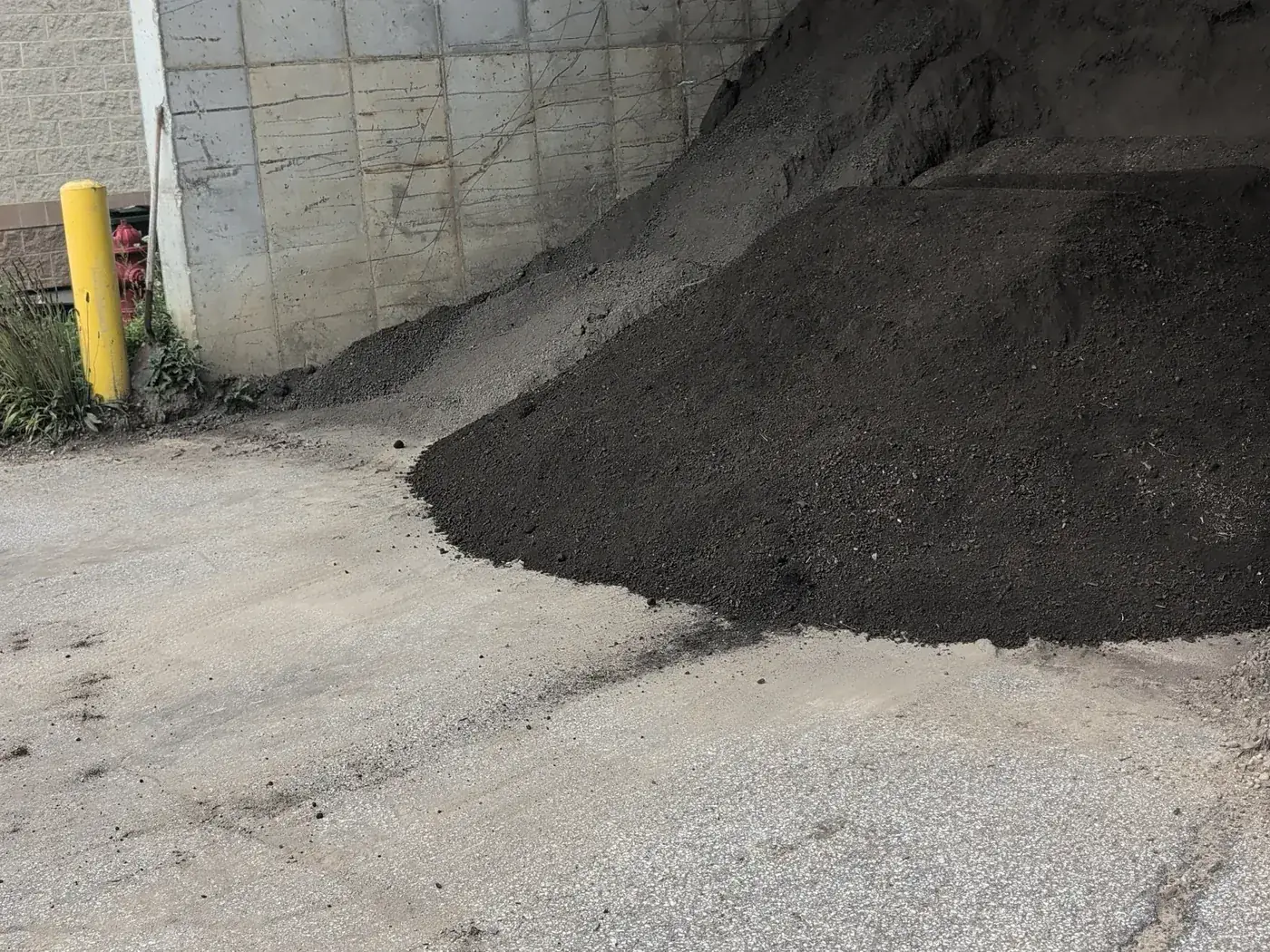
A loaded dump truck placing a pile of screened topsoil at the end of a residential driveway.
What a Loaded Dump Truck Needs
This is the part first time buyers underestimate. A dump truck carrying several tons of wet soil is heavy, long and tall, and it needs room in three directions.
Width and turning. The truck needs a path wide enough to get in and, just as importantly, a way to get back out. Narrow drives with tight bends or parked cars on both sides are the most common problem.
Overhead clearance. The bed has to rise to dump. Low branches, carport roofs, basketball hoops and utility wires all sit in that arc. Trim or flag anything questionable before the truck arrives.
Surface. Soft lawns, fresh pavers and septic lids do not take truck weight well. Material is placed where the truck can safely reach, and drivers do not typically drive across lawns to deliver. That is a protection for your property, not a limitation on service.
Clear space at the drop. The pile needs an empty footprint. Move vehicles, trash cans, hoses, planters and anything else in the way the night before.
For a walkthrough of prepping the actual drop area, see how to prepare your driveway for a bulk material delivery truck.
Load Limits and Delivery Costs
Loads are capped by material, so the quantity you need may spread across more than one trip.
| Material | Up to per load | Delivery |
|---|---|---|
| Screened topsoil | 5 cubic yards | $50 per load, free in Stow and Hudson on 4 yards or more |
| Leaf compost | 8 cubic yards | $50 per load, free in Stow and Hudson on 4 yards or more |
| Asphalt millings | 5 cubic yards | $50 per load, never qualifies for free delivery |
Delivery covers Stow, Cuyahoga Falls, Munroe Falls, Silver Lake, Tallmadge, Hudson, Kent, Akron, Twinsburg, Macedonia, Aurora and Streetsboro.
One thing worth knowing up front. A delivery is made to the curb. Past the curb, the yard is not responsible for damage to driveways, sidewalks, homes, garages, fences, plants, vehicles or utility wires. If you want the pile somewhere past the curb, say so and the driver will do what can be done safely, with that understanding.
Ordering From O'Bryan
O'Bryan Grounds Maintenance has been independently owned and operated in Stow since 1993, with Doug O'Bryan running it for more than thirty years. The material side trades as O'Bryan Topsoil and Compost, with its own line at (330) 805-7556, loading out of O'Bryan's own yard at 859 Seasons Rd Suite 1 in Stow. Everything is screened, stacked and loaded there, which is why the yard can tell you what is in it.
O'Bryan sells screened topsoil, leaf compost and asphalt millings by the cubic yard, delivered by dump truck across Summit County. Tell us about your property or project and we will get right back to you. If you have the dimensions, O'Bryan will work out the yards with you rather than leaving you to guess. Across 23 Google reviews the company holds a 4.8 rating.
Ready to order, or still working out the quantity? Send us the details of your project and we will size it with you.
FAQs
How much topsoil do I need?
One cubic yard covers about 100 square feet at three inches deep. Measure the area, pick your depth, and divide. If you would rather not do the math, tell us the project and we will size the load.
How is the material delivered?
By dump truck. Placement depends on where the truck can safely get to, and we do not typically drive across lawns for delivery. Clear the drop area and move vehicles before the truck arrives.
What if my order is bigger than one load?
Then it comes in more than one trip. Screened topsoil and asphalt millings go up to 5 yards per load, and leaf compost up to 8 yards per load. Delivery is charged per load, so it is worth sizing the order carefully before you book.
What is the difference between topsoil and leaf compost?
Topsoil is what you build with, for lawns, grading, filling low spots and new sod. Compost is an amendment you mix in to add organic matter. Worked into heavy clay it improves drainage, and in sandy soil it helps hold moisture where roots can reach it.
Can I leave the pile sitting for a while before I spread it?
Usually yes, with some care about where it sits and what it sits on. Our guide on storing a fresh topsoil or compost delivery before you spread it covers covering the pile, protecting the surface underneath and how long you can reasonably wait.
Need material delivered?
Tell us the material, the town and roughly how many yards, and we will size the load with you.