
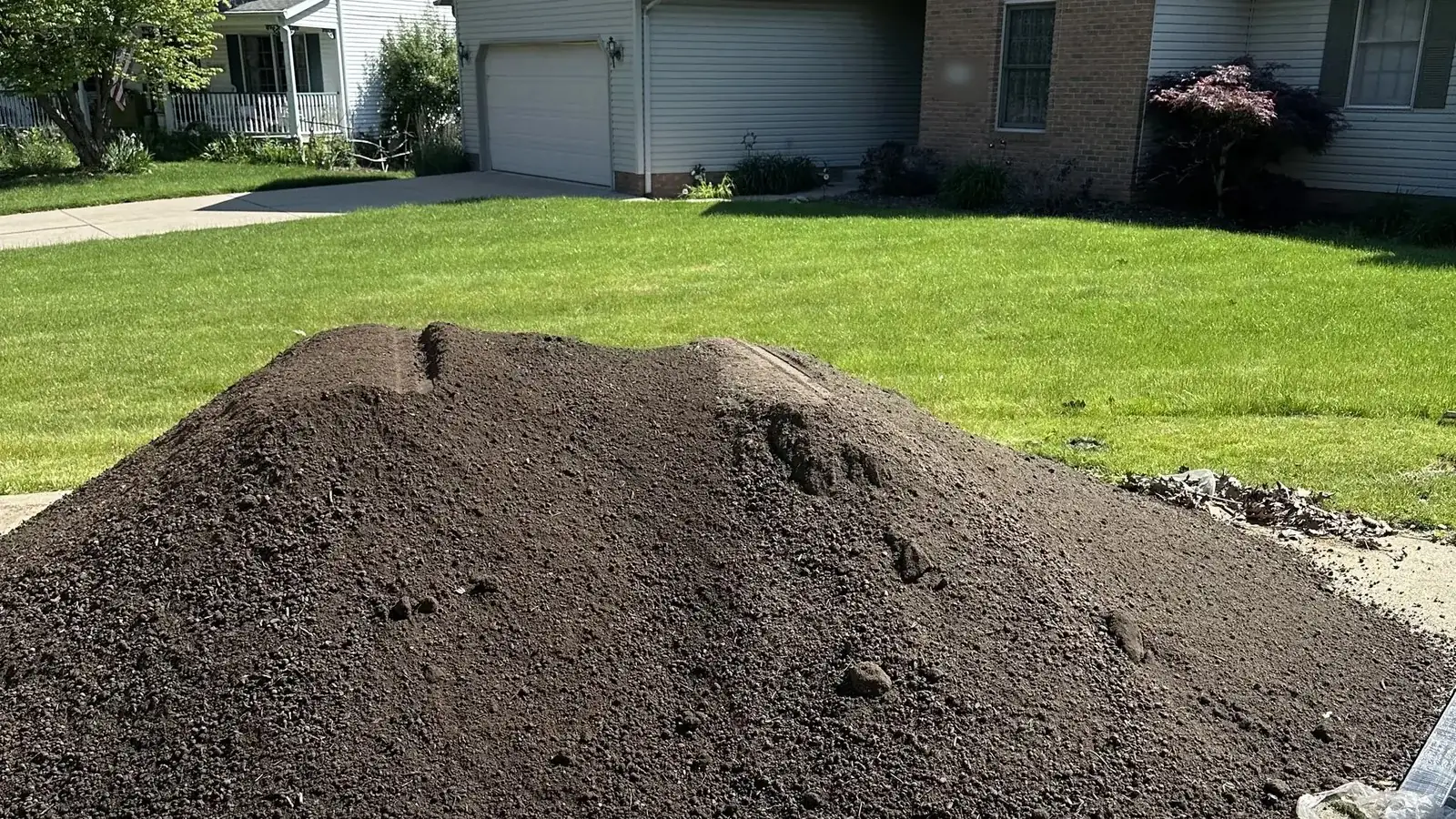
Sod succeeds or fails on what is underneath it, so the ground has to be stripped, graded and rebuilt with loose screened topsoil before a single pallet arrives. Sod comes with a thin mat of soil and roots and nothing else. If it is laid on packed clay or leftover construction fill, the roots stay in that mat and the lawn struggles the following summer. The prep work is the install.
Here's the short version:
- Strip the old surface down to clean soil, then set your grade before any new material goes in.
- Build a loose, screened soil layer deep enough for roots to leave the sod mat and keep going.
- Break up compaction underneath instead of covering it, because a hard pan shows up in year two, not year one.
- Measure the area in square feet and order soil by the cubic yard before you order pallets.
What Sod Actually Needs Underneath It
A roll of sod is grass, roots and a shallow skin of soil. That is the whole package. Everything the lawn will need for the next decade has to come from the ground you set it on.
Three things matter most. The soil has to be loose enough for roots to push down into it. It has to hold moisture without staying soaked, since sod that dries out in the first weeks never knits in. And it has to be graded so water runs away from the house and off the lawn rather than pooling in low spots.
In much of Summit County the native ground is heavy clay. Clay holds water and nutrients well, which is not a bad thing, but it also compacts hard and drains slowly. Laying sod straight onto scraped clay usually looks fine through the first fall. The trouble arrives the second summer, when the roots have run out of room and the lawn browns off in the heat while a properly prepped lawn next door stays green.
How to Prepare the Ground by Stripping and Grading First
Start by getting rid of what is there. Old turf, thatch, weeds and any construction debris come off. Sod laid on top of dead grass is sitting on a layer that will decompose and leave the surface uneven and spongy.
Once you are down to soil, look at the grade before you add anything. Walk the area after a rain and mark where water sits. Fixing a low spot now takes a shovel and a rake. Fixing it after the sod is down means cutting the new lawn apart. The same measuring and filling approach used for leveling a bumpy lawn with screened topsoil before fall seeding applies here, with the advantage that nothing is growing yet to work around.
Loosening What Is Left
This is the step most people skip. If the subsoil is packed from foot traffic, equipment or a builder's machinery, adding topsoil on top just creates a soft layer sitting on a hard plate. Water reaches the boundary and stops. Roots reach it and stop too.
Break the top few inches of the existing soil up so the new material can bond with it. On a small yard that can be done by hand. On a larger area it is worth renting a machine. The goal is one continuous body of soil, not two separate layers.
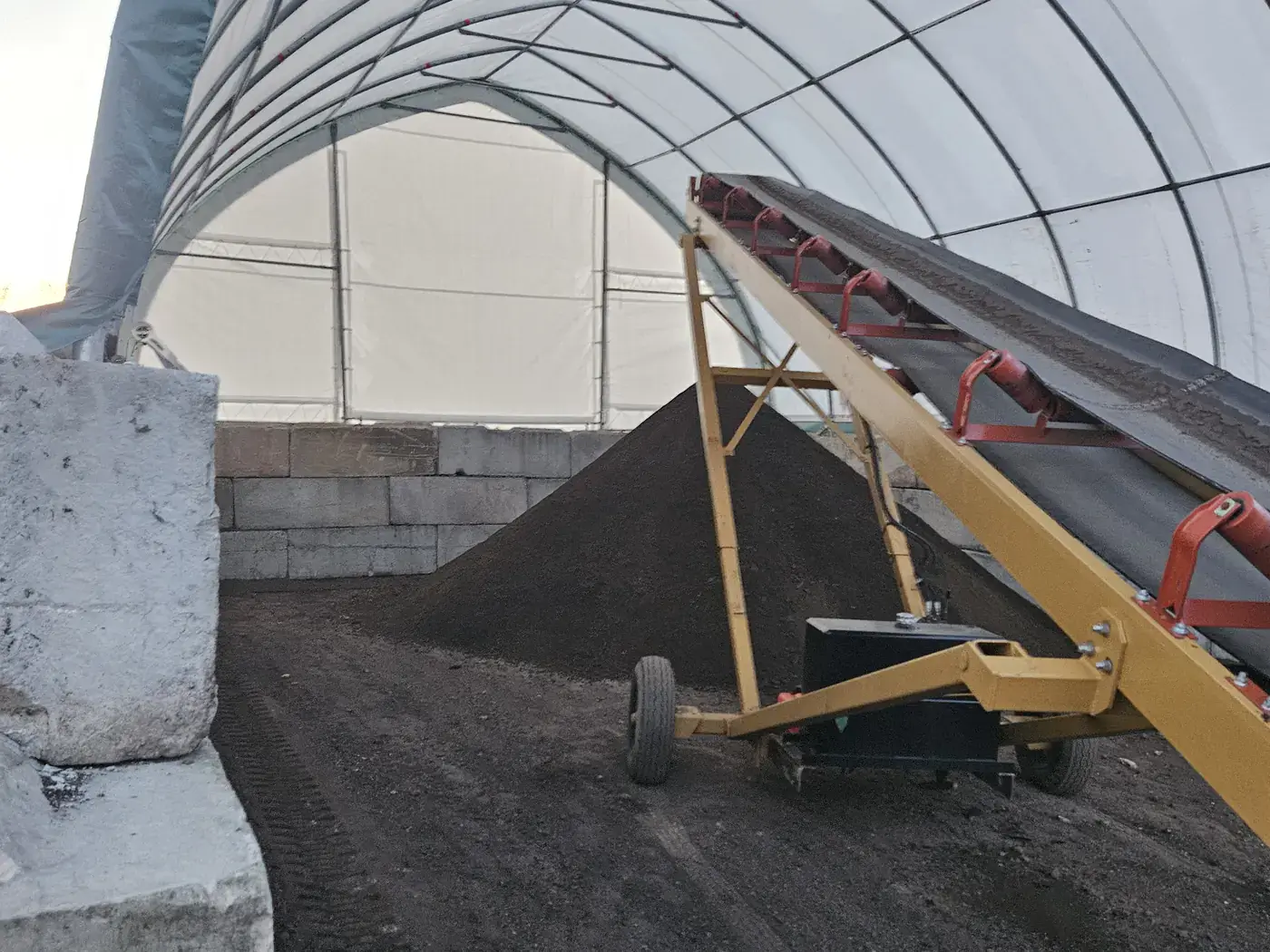
Screened topsoil raked out over a stripped area, with the old surface loosened underneath before the new soil went down.
How Deep to Build Soil for Sod Over Northeast Ohio Clay
Sod roots will travel as far as the soil lets them. Over clay, aim for a generous layer of loose screened topsoil, worked into the loosened ground below rather than dumped flat on top of it. Deeper is better, and the thinner you go, the more the lawn depends on you watering it through every dry stretch.
Screened material matters here because rocks and roots left in unscreened dirt create voids and high points under the sod. Sod needs continuous contact with the soil to root in. A stone under a seam turns into a dead strip. Screened topsoil rakes out smooth and stays smooth.
If your ground is especially heavy, working compost into the top layer helps with structure and drainage. Topsoil is the material you build with, and compost is an amendment you mix in to add organic matter. Before you decide how much to blend in, it is worth reading what leaf compost actually does to heavy clay soil in Northeast Ohio.
After the soil is spread and graded, firm it lightly and rake it to a fine, even surface. Firm, not compacted. You want a footprint to leave a shallow impression, not a hole.
Sizing the Soil Order Before the Sod Pallets Arrive
Sod is sold by area and soil is sold by volume, which is where orders go wrong. Measure the install area in square feet first. Break odd shapes into rectangles and add them up.
One cubic yard of topsoil covers about 100 square feet at three inches deep. From there the math is simple.
| Area to sod | Soil at about 3 inches | Soil at about 4 inches |
|---|---|---|
| 500 sq ft | about 5 cubic yards | about 7 cubic yards |
| 1,000 sq ft | about 10 cubic yards | about 13 cubic yards |
| 2,000 sq ft | about 20 cubic yards | about 27 cubic yards |
| 3,000 sq ft | about 30 cubic yards | about 40 cubic yards |
A few notes on logistics. Screened topsoil comes up to five cubic yards per load, so a larger lawn is several loads and worth scheduling before the sod is cut and sitting on a pallet. Leaf compost is a different limit, up to eight cubic yards per load, so if you are ordering both for the same job the truck counts will not match the way you might expect. Dump truck delivery goes where the truck can safely reach, usually the driveway or curb, so plan a spot near the work area and have a wheelbarrow route in mind.
Order the soil first and the sod second. Sod is a perishable product. Soil sitting in a pile for a few days costs you nothing, while pallets of sod waiting on unfinished ground start to yellow.
Getting Sod Prep Material to the Job in Summit County
O'Bryan Grounds Maintenance has been independently owned in Stow since 1993, and the material side sells screened topsoil, leaf compost and asphalt millings by the cubic yard out of our own yard on Seasons Road. Everything is screened, stacked and loaded there, so what shows up on your driveway is the same material we handle every day.
For a sod prep job we can help you turn square footage into cubic yards so you are not guessing, then deliver by dump truck across Stow, Cuyahoga Falls, Munroe Falls, Silver Lake, Tallmadge, Hudson, Kent, Akron, Twinsburg, Macedonia, Aurora and Streetsboro. Most projects start with bulk screened topsoil delivery, and heavier clay yards often add leaf compost delivery to work into the top few inches. The material yard runs weekdays 9 to 5 in the warm months, roughly April through October, so schedule around that window when you are lining up sod pallets. To get material scheduled, see how bulk material delivery works or call (330) 805-7556.
FAQs
How much topsoil do I need for a sod install?
Measure the area in square feet, then divide by 100 for every three inches of depth you want. A 1,200 square foot lawn at three inches works out to about 12 cubic yards. Tell us the project and we will size the load.
Can I lay sod directly on clay if I skip the topsoil?
The sod will usually root enough to look fine the first season. The problem shows up in the second summer, when roots have nowhere to go and the lawn burns off in dry heat. Building a loose soil layer first is what makes the lawn durable.
What is the difference between topsoil and leaf compost for this job?
Topsoil is what you build with, the body of material that fills and grades the area. Compost is an amendment you mix into the top layer to add organic matter, improve drainage in clay and help hold moisture. Most sod prep jobs use mostly topsoil with compost blended into the surface.
Where will the truck put the soil?
Material is placed where the dump truck can safely reach, typically the driveway or the curb. We do not usually drive across lawns to deliver, which matters even more when the ground has just been graded for sod.
When is the best time of year to do the prep work?
The material yard runs weekdays 9 to 5, roughly April through October, so any point in that window works. What matters more is having the soil delivered, spread and graded before the sod is cut and delivered, since sod cannot sit on a pallet while you finish the ground.
Need material delivered?
Tell us the material, the town and roughly how many yards, and we will size the load with you.