
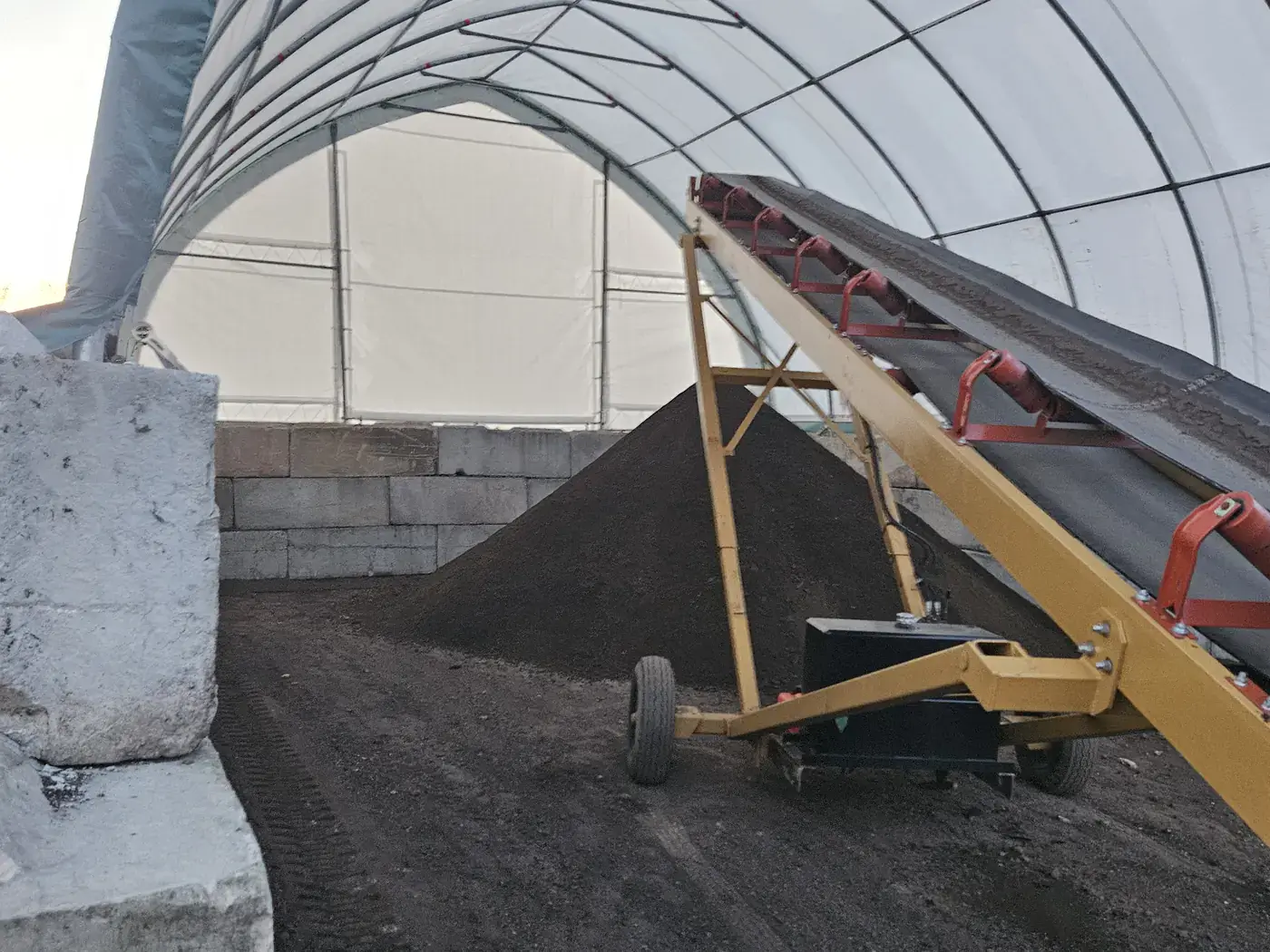
One cubic yard of screened topsoil covers about 100 square feet at three inches deep, so most fall lawn repairs land somewhere between one and five yards. The number you order depends on the square footage you are fixing and how deep you need to go. Measure the patch, pick a depth, and the math is simple from there. The harder part is ordering while the material yard is still open for the season.
Here's the short version:
- Measure length times width of the area you are repairing, in feet, to get square footage.
- One cubic yard covers roughly 100 square feet at three inches deep, 150 square feet at two inches, and 300 square feet at one inch.
- Order before the ground turns cold and wet, because the warm month material season runs roughly April through October.
Measure the repair area, not the whole lawn
Homeowners often start by thinking about the size of the yard. That is the wrong number. For a fall repair you only need topsoil where the ground is actually bad, which is usually a handful of bare patches, a settled low spot, or a strip along a driveway edge where plowing and traffic wore the turf down.
Walk the lawn with a tape measure and treat every problem area as a rectangle. A kidney shaped bare patch that is roughly eight feet by twelve feet is 96 square feet. Round up to 100 and move on. Irregular shapes are not worth agonizing over, because topsoil settles and spreads unevenly anyway, and a little extra is far better than running short halfway through the job.
Write each area down as its own line. Three bare patches at 100, 60, and 40 square feet add up to 200 square feet total, and that total is what you size the order against.
Pick a depth before you pick a number of yards
Depth matters more than most people expect, because it drives the yardage harder than area does.
A thin topdressing over existing turf before overseeding is a light pass, just enough to work into the surface and hold seed without burying the grass that is already there. Filling a bare patch back down to bare dirt takes a deeper layer than that. Bringing a settled low spot back up to grade takes deeper still, and deep fills are usually better done in layers so the soil does not keep sinking after you seed it.
If you are topdressing an existing lawn rather than rebuilding a patch, the approach in Fall Overseeding in Northeast Ohio, and Why Topdressing With Screened Topsoil Changes the Result will tell you how thin to keep the layer so you do not smother what is already growing.
Turning square feet into cubic yards
The rule to remember is that one cubic yard covers about 100 square feet at three inches deep. Everything else scales off that. Double the depth and you halve the coverage. Cut the depth in half and you double the coverage.
| Depth | Area one cubic yard covers |
|---|---|
| 1 inch | About 300 square feet |
| 2 inches | About 150 square feet |
| 3 inches | About 100 square feet |
| 4 inches | About 75 square feet |
| 6 inches | About 50 square feet |
So the formula is your total square footage divided by the coverage number for the depth you chose. Round up to the nearest half yard, and if you are between two numbers, take the larger one. Leftover screened topsoil is useful for bed edges, settling spots that show up later, and filling around fence posts. A short load means a second trip.
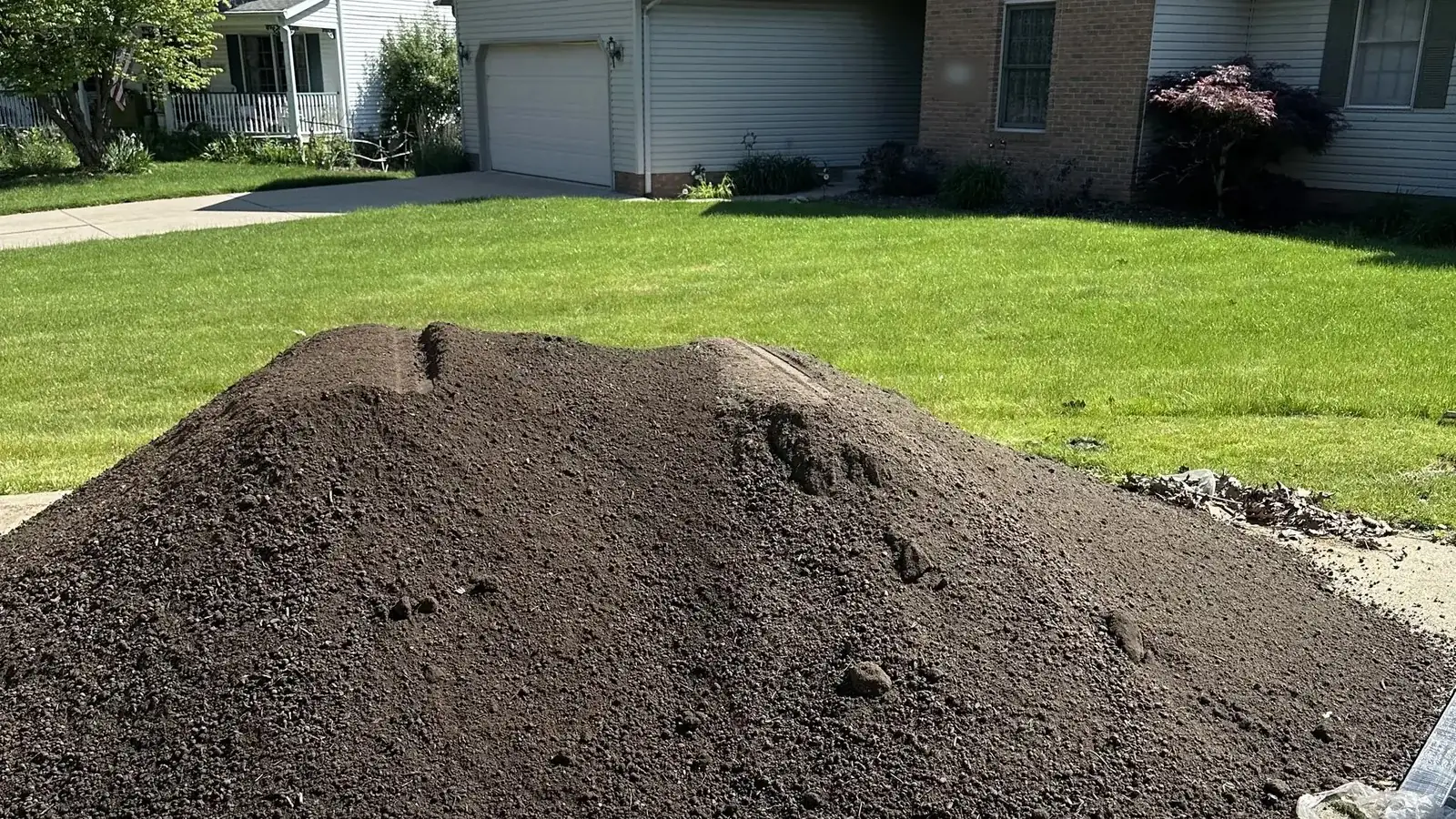
A dump truck load of screened topsoil placed on a driveway where the truck could reach it.
Worked examples for common fall repairs
Three small bare patches totaling 200 square feet, filled two inches deep. 200 divided by 150 is about 1.3 yards. Order one and a half to two yards.
A settled low spot ten feet by twenty feet, brought up four inches. That is 200 square feet divided by 75, so about 2.7 yards. Order three yards. This is the layered fill described above, so split those three yards into two passes and let the first one settle before the second goes down. If the low spot is holding water as well as sitting low, the approach in Fixing Low Spots and Yard Drainage Before Northeast Ohio Autumn Rain is worth reading before you order, because the fix may be more than fill.
A full repair strip along a driveway, two feet wide and sixty feet long, at three inches. That is 120 square feet, so roughly one and a quarter yards. One and a half yards is the practical order.
A larger rebuild of 500 square feet at three inches. That is five yards, which is a full load for screened topsoil.
Screened topsoil goes out at up to five yards per load, so a job that works out to seven or eight yards is a two load job. That is worth knowing before you schedule, because it changes where you ask the truck to put the material. If your total is getting hard to pin down, the walkthrough in How Many Cubic Yards Do You Need, A Plain Guide to Sizing a Bulk Material Order covers odd shapes and multi material jobs.
One more thing on material choice. Topsoil is what you build with and compost is an amendment you mix in. If the ground under your bare patches is heavy clay that stays wet, a few yards of topsoil plus some Leaf Compost Delivery worked in will hold up better than topsoil alone.
Why a fall repair has to be ordered before the ground turns
Bulk material in Summit County is a warm weather business. The yard on Seasons Road in Stow runs weekdays, warm months only, roughly April through October. Once the season closes, the trucks are on snow and ice work instead, and screened topsoil is not going out again until spring.
There is also the practical side of the ground itself. Topsoil spreads and rakes well when it is dry and workable. Wet, cold, late season soil turns heavy and clumpy, it tracks across everything, and it does not level cleanly. Seed sown into a surface like that has a poor chance. If you are doing a fall repair, the window is now, not in November.
Delivery placement matters too. Material goes where the dump truck can safely reach, which usually means the driveway or curb. Trucks do not typically drive across lawns for delivery, so pick a drop spot you can wheelbarrow from and clear it before the truck arrives.
Ordering screened topsoil in Stow and across Summit County
O'Bryan Grounds Maintenance has been independently owned and operated in Stow since 1993, with Doug O'Bryan running it for more than thirty years. The material side screens, stacks and loads out of our own yard at 859 Seasons Rd Suite 1 in Stow, and sells screened topsoil, leaf compost and asphalt millings by the cubic yard, delivered by dump truck across Stow, Cuyahoga Falls, Munroe Falls, Silver Lake, Tallmadge, Hudson, Kent, Akron, Twinsburg, Macedonia, Aurora and Streetsboro.
Delivery is $50 per load, and there is no delivery charge on screened topsoil or leaf compost in Stow and Hudson on loads of four yards or more. Tell us the size of the area and the depth you are after and we will help you work out how many yards the job takes. You can see load limits, coverage and the delivery area on the Bulk Screened Topsoil Delivery page, or schedule a bulk material delivery and tell us about the project.
When the season flips, the same company is on driveways and lots. Homeowners can look at Residential Driveway Snowplowing for the winter side.
FAQs
How much topsoil do I need?
One cubic yard covers about 100 square feet at three inches deep. Multiply length by width in feet to get your square footage, then divide by the coverage for your depth. Tell us the project and we will size the load.
How is the topsoil delivered?
By dump truck. Placement depends on where the truck can get to, and we do not typically drive across lawns for delivery. Have the drop area clear so the load can go somewhere you can work from.
Can I get topsoil in November or over the winter?
The material yard runs warm months only, roughly April through October, weekdays 9 to 5. Fall repairs should be ordered while the season is still open and the ground is still workable.
Should I use topsoil or leaf compost for a bare patch?
Topsoil is what you build with, and compost is an amendment you mix in to add organic matter. For filling and regrading, use screened topsoil. If the underlying soil is heavy clay, mixing in leaf compost helps drainage.
What if my job works out to more than five yards?
Screened topsoil goes out at up to five yards per load, so larger jobs are delivered in more than one load. Give us the total and we will plan the loads and the drop spots with you.
Need material delivered?
Tell us the material, the town and roughly how many yards, and we will size the load with you.